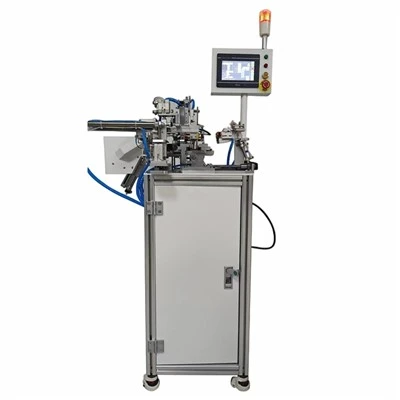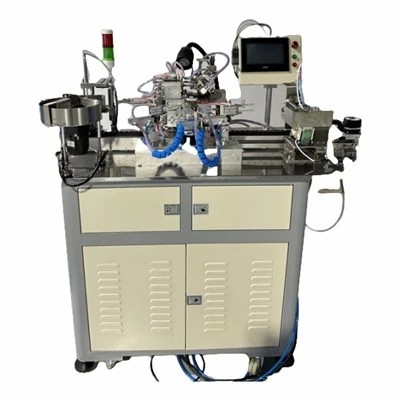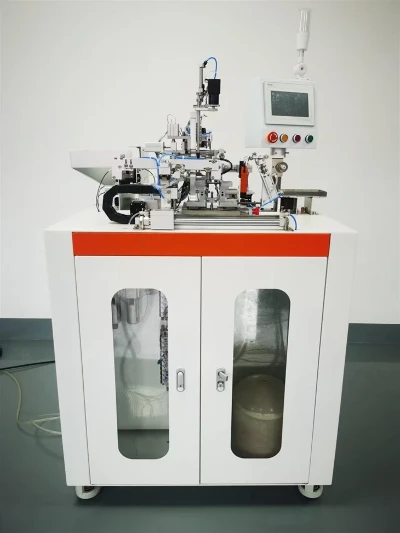


Fully Automatic Ceiling Fan Winding Machine: Your Go-To for Efficient Fan Making

1. Comprehensive Process Autonomy and Throughput Optimization
The transition to fully autonomous winding systems eliminates the "efficiency bottleneck" inherent in manual and semi-automated production. This apparatus executes a complete manufacturing cycle-encompassing wire feeding, precision winding, layering, termination, and component discharge-without human intervention. While a manual cycle typically requires 3–5 minutes per unit, this system reduces the interval to 30–40 seconds, representing a 200% increase in throughput. Furthermore, the capacity for 24-hour continuous operation ensures consistent output levels, unaffected by shift transitions or operator fatigue, thereby accelerating large-scale order fulfillment.
2. High-Fidelity Winding and Energy Performance
Coil integrity is the primary determinant of motor efficiency and acoustic performance. Integrating high-precision servo drives with laser-based sensory feedback, the equipment achieves exacting tolerances: turn-count accuracy within $\pm1$ turn and wire pitch deviation below $0.05mm$. This structural uniformity ensures a balanced magnetic field, enabling motors to meet Tier 1 energy efficiency benchmarks-reducing power consumption by 10%–25% compared to manual counterparts. Additionally, optimized coil density dampens mechanical vibration, sustaining noise levels below 28dB for superior operational silence.
3. Versatile Parameter Management and Tooling Flexibility
To address the diverse specifications of the global fan market-spanning 36-inch residential units to 56-inch industrial models-the system utilizes a sophisticated control framework. The onboard processor retains hundreds of discrete production recipes, allowing for near-instantaneous transitions between varying inner/outer diameters and wire gauges. Switching between product lines is achieved via a 3-minute procedure involving software selection and modular fixture exchange. This adaptability allows a single production line to handle heterogeneous workloads, optimizing capital investment and facility space.
4. Strategic Cost Rationalization: Labor and Materials
Automation serves as a primary driver for overhead reduction. By reconfiguring the labor ratio, a single technician can manage a cluster of 4–6 autonomous units, yielding significant annual savings in personnel expenditure. From a material standpoint, the system's precision tension control and exacting layering logic minimize conductor waste. Wire utilization rates are elevated from a manual average of 92% to over 98%. In high-volume environments, this 6% increase in copper wire efficiency results in substantial long-term material cost savings.
5. Intelligent Diagnostics and Lifecycle Maintenance
The system features a 10-inch high-definition HMI (Human-Machine Interface) that provides real-time telemetry on system status and fault metrics. This transparency reduces the technical threshold for operators, lowering training overhead. For maintenance, integrated self-diagnostic protocols immediately identify anomalies-such as tension variance or wire breakage-and provide localized error reporting for rapid troubleshooting. The modular hardware architecture facilitates the swift replacement of key sub-assemblies, ensuring minimal downtime and simplified service protocols.
6. Quality Standardization and Global Regulatory Compliance
As international markets enforce stricter energy mandates (e.g., EU ERP Directive, US Energy Star), standardized production becomes a prerequisite for market entry. This autonomous system eliminates human-induced quality fluctuations, ensuring that every unit adheres to uniform electrical and mechanical specifications. For export-oriented manufacturers, this consistency maximizes inspection pass rates and mitigates the risk of non-compliance, providing a robust foundation for brand prestige and international market expansion.