


Can a stranding winding machine be used for fine - wire stranding?
As a supplier of stranding winding machines, this is a question I often encounter from our customers. Fine - wire stranding has unique requirements, and understanding whether our machines can meet these needs is crucial for both our clients and our business.
First, let's understand the characteristics of fine - wire stranding. Fine wires, typically with diameters ranging from a few micrometers to a few tenths of a millimeter, require extremely precise handling. These wires are more fragile compared to thicker ones, and any excessive tension or improper handling during the stranding process can lead to wire breakage. Moreover, the stranding pitch and the uniformity of the strand are of high importance in fine - wire applications, such as in the production of high - precision electronic components, medical devices, and aerospace wiring.
Our stranding winding machines are designed with advanced technology and engineering to address these challenges. The machines are equipped with precise tension control systems. These systems can maintain a consistent and gentle tension on the fine wires throughout the stranding process. By carefully adjusting the tension, we can prevent the wires from breaking while ensuring that they are tightly and evenly stranded. For example, in the Six Spindles Automatic Stranding Coil Winding Machine, the tension control mechanism is highly sensitive and can be fine - tuned according to the specific requirements of the fine wires.
Another key aspect is the speed control of the stranding process. Fine wires need to be stranded at a relatively slow and stable speed to avoid mechanical stress and ensure the quality of the strand. Our machines offer variable speed settings, allowing operators to select the most appropriate speed for different types of fine wires. The KX - 984B 4 - Axis Twisting And Winding Machine is a great example. It has a precise speed control system that can be adjusted to match the delicate nature of fine - wire stranding, ensuring that the wires are stranded smoothly without any damage.
In addition to tension and speed control, the accuracy of the stranding pitch is also critical for fine - wire applications. Our stranding winding machines are capable of achieving highly accurate stranding pitches. They are equipped with advanced sensors and control algorithms that can monitor and adjust the stranding pitch in real - time. This ensures that the final strand meets the strict quality standards required for fine - wire applications. For instance, in high - frequency communication cables made from fine wires, the precise stranding pitch is essential for maintaining signal integrity.

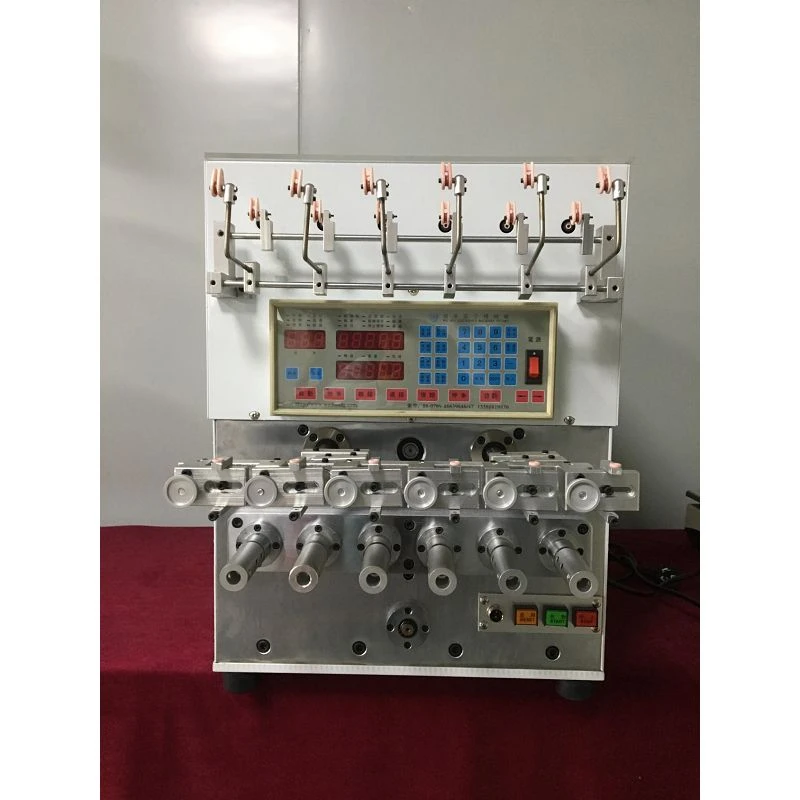
The construction materials and the design of our machines also play an important role in fine - wire stranding. The parts that come into contact with the fine wires are made of high - quality, smooth materials to minimize friction. Friction can cause abrasion on the fine wires, leading to damage and reduced performance. The machine's design is also optimized to provide a clean and stable working environment. This helps to prevent dust and other contaminants from adhering to the fine wires during the stranding process, which could otherwise affect the quality of the final product.
However, it's important to note that while our stranding winding machines are well - suited for fine - wire stranding, there are still some factors that need to be considered. The type of fine wire, such as its material (copper, aluminum, etc.), insulation properties, and surface finish, can all affect the stranding process. Different materials may have different mechanical and electrical properties, which require corresponding adjustments to the machine settings. For example, copper fine wires may require different tension and speed settings compared to aluminum fine wires.
The specific application of the stranded fine wires also matters. Some applications may have more stringent requirements for the strand's flexibility, tensile strength, or electrical conductivity. In such cases, additional post - processing steps may be needed after the stranding process. Our technical support team is always ready to assist customers in determining the most suitable machine settings and processes based on their specific needs.
In conclusion, our stranding winding machines can indeed be used for fine - wire stranding. With their advanced tension control, speed control, accurate pitch adjustment, and high - quality construction, they are well - equipped to handle the challenges of fine - wire stranding. Whether you are in the electronics, medical, or aerospace industry, our machines can help you produce high - quality stranded fine wires.
If you are interested in learning more about our stranding winding machines for fine - wire stranding or would like to discuss your specific requirements, we encourage you to contact us for a detailed consultation. Our team of experts is eager to work with you to find the best solutions for your business.
References
- Industry standards for fine - wire stranding in electronic components
- Technical manuals of our stranding winding machines
- Research papers on the mechanical and electrical properties of fine wires in different applications


