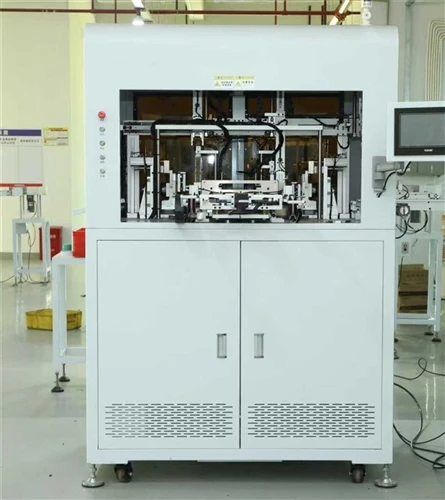
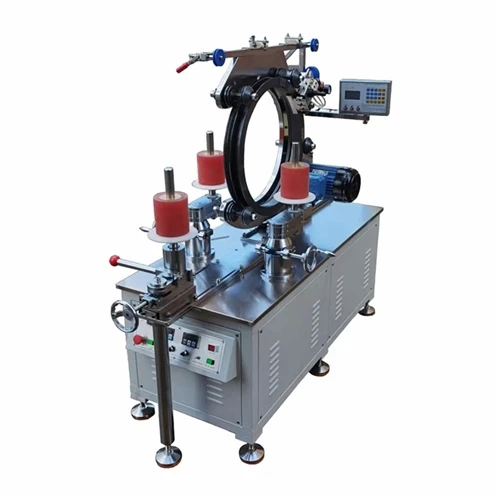
In the toroidal transformer manufacturing industry, the shift from manual to automatic winding is no longer a trend, but a necessity. Today, intelligent automatic toroidal transformer coil winding machines are completely reshaping production efficiency, quality standards, and cost control-creating a stark contrast with the inefficiencies and inconsistencies of manual winding.
The Struggles of Manual Winding: A Costly Burden
For decades, manual winding has been the go-to method for many factories, but it comes with inherent, costly flaws:
Quality Instability: Winding tightness varies drastically between operators, leading to inconsistent transformer performance. Cold solder, wrong turns, and wire damage are common, resulting in a defect rate that often exceeds 5%.
Slow Production: A skilled worker can typically wind only 10-15 small toroidal coils per hour. Meeting mass production orders requires hiring dozens of workers, driving up labor costs exponentially.
High Reliance on Expertise: Experienced workers are scarce and expensive. Training new hires takes months, and losing a key worker disrupts production.
Inaccurate Process Control: Manual winding cannot achieve precise, repeatable parameters like line spacing or turns count, making it impossible to meet the strict tolerances of modern electronics.

The Superiority of Automatic Winding Machines: Precision, Speed, and Consistency
Intelligent automatic toroidal transformer coil winding machines eliminate these pain points through advanced technology, delivering results that manual winding can never match:
1. Precision Beyond Human Capability
Manual winding struggles with accuracy, but automatic machines deliver ±0.001mm precision in line spacing and winding position. Every coil is identical, ensuring a consistent product quality with a defect rate as low as 0.5%. This level of precision is critical for high-frequency transformers and automotive electronics.
2. 5x Faster Production, 70% Lower Labor Cost
Automatic machines operate 24/7 without fatigue, winding up to 80-100 coils per hour-5-8 times faster than manual labor. A single operator can oversee 3-4 machines, slashing labor costs by over 70% and significantly boosting production capacity.
3. Intuitive Operation, No Skilled Worker Required
Equipped with a user-friendly touch screen and pre-programmed recipes, automatic winding machines require minimal training. Even new employees can operate the machine with a single click, eliminating the risk of losing skilled staff and reducing downtime.
4. Unmatched Durability & Consistency
Built with industrial-grade components (servo motors, precision drives), automatic machines deliver stable performance for years, supporting continuous high-volume production. Manual winding, by contrast, leads to fatigue-related errors and inconsistent output.

The Clear Choice: Automatic Winding Wins on Every Front
表格
| Aspect | Manual Winding | Automatic Toroidal Winding Machine |
|---|---|---|
| Quality Consistency | High defect rate, uneven performance | 99.5%+ pass rate, identical quality |
| Production Speed | 10-15 coils/hour | 80-100 coils/hour |
| Labor Cost | High, with rising wages | 70%+ cost reduction |
| Skill Requirement | Needs experienced workers | Operated by general staff |
| 24/7 Operation | Impossible (fatigue, shift limits) | Standard feature |
| Precision | Inconsistent tolerances | ±0.001mm accuracy |
Conclusion
The gap between manual and automatic winding has never been wider. Manual winding is a bottleneck-costly, unpredictable, and unable to meet modern production demands. Intelligent automatic toroidal transformer coil winding machines offer a clear path forward: higher quality, faster production, lower costs, and greater scalability.
For factories looking to stay competitive in the global market, the choice is clear: embrace automatic winding technology, and say goodbye to the inefficiencies of manual labor for good.