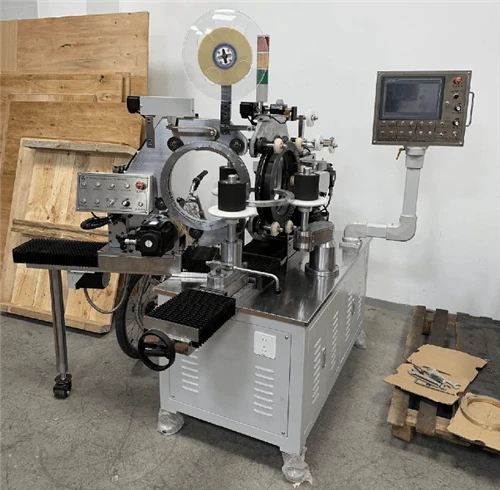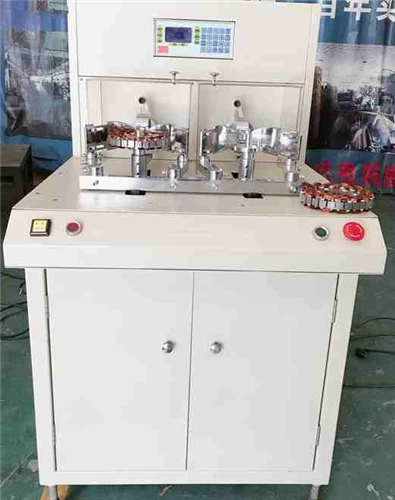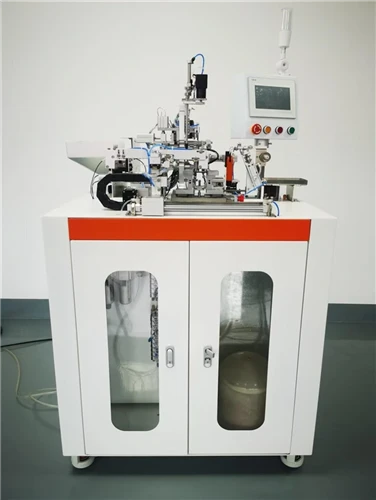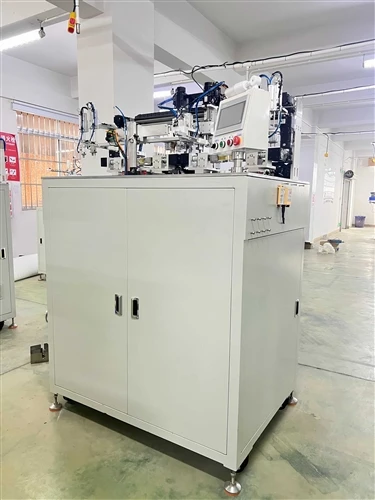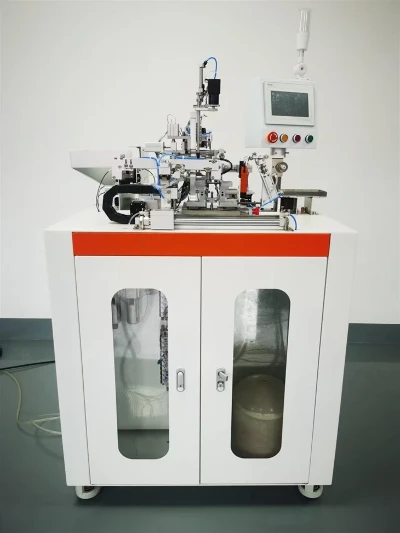


With the trend toward miniaturization and higher performance in electronic devices, the precision and efficiency of the winding process directly impact product reliability and cost. As key equipment in this process, automatic parallel winding machines, with their intelligent and high-precision features, are becoming irreplaceable infrastructure in the electronics manufacturing industry chain.
Traditional manual winding relies on operator experience, which can easily lead to problems such as wire diameter deviation, turn count errors, and loose wires. However, automatic parallel winding machines, through the coordinated control of servo motors and optical sensors, achieve micron-level wire pitch adjustment and ±0.1% turn count accuracy. For example, in transformer or inductor production, the machine can stably maintain the parallel density of enameled wire, avoiding energy loss caused by magnetic field interference, which is critical to the performance of high-frequency devices such as 5G communication modules.
The machine's even more significant value lies in the efficiency revolution in large-scale production. A six-axis fully automatic winding machine can complete 3,000 coils per hour, equivalent to the daily output of 10 skilled workers, and supports 24-hour continuous operation. After introducing this equipment, a new energy vehicle motor manufacturer saw its coil yield rate increase from 82% to 99.6%, saving over 10 million yuan in annual rework costs. Furthermore, by enabling quick switching between different specifications through pre-set programs, the company can flexibly respond to small-batch orders for a wide variety of products, significantly shortening delivery cycles.
From a technological perspective, the automatic parallel winding machine integrates the Industrial Internet of Things (IIoT) and AI algorithms to monitor tension fluctuations in real time, autonomously optimize winding paths, and even predict mold wear. This intelligent "equipment as a service" model is driving electronics manufacturing toward zero defects. It's fair to say that without high-precision winding automation, technological breakthroughs in cutting-edge fields such as chip packaging and new energy storage would be difficult to achieve. In the future, with the convergence of materials science and robotics, winding machines will further become core equipment that defines the future of the electronics industry.