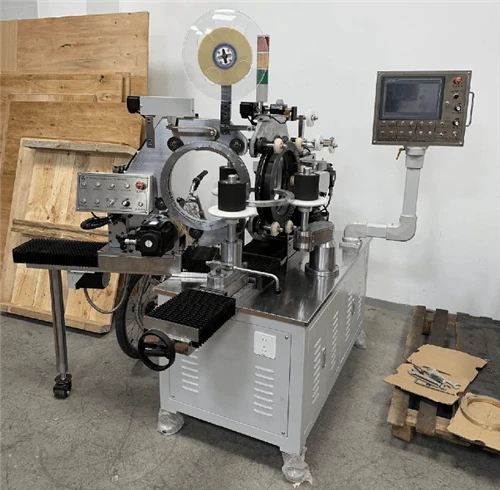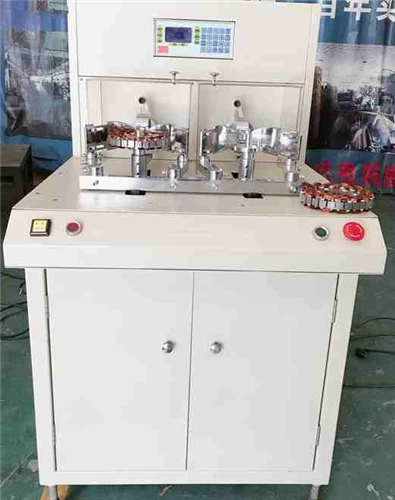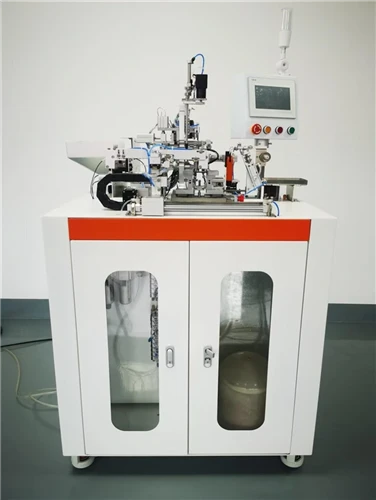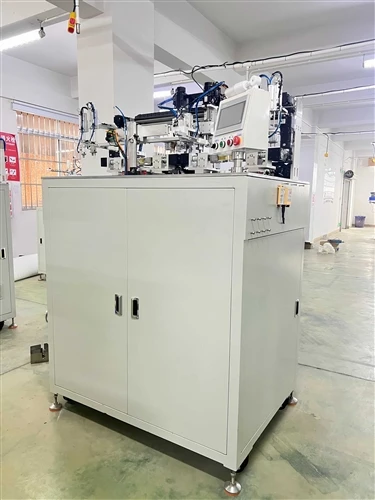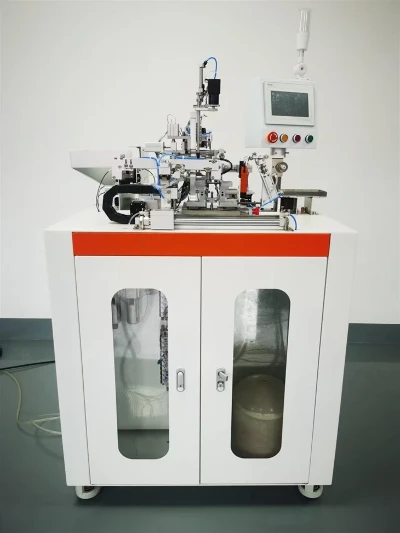


In the transformer and inductor manufacturing industry, "coil" and "winding" are two terms that get used almost interchangeably - yet for engineers, procurement teams, and equipment buyers, understanding the distinction matters.
It affects everything from how you read a technical drawing to how you specify the right KIOXIA winding machine for your production line. This article breaks down the terminology clearly, then walks through the machine features that turn raw wire into a finished, reliable coil.

1.Understanding the Core Terminology
a.What Is a Coil?
A coil is the physical, finished component - a length of wire wound into a specific shape (helical, toroidal, flat, or layered) around a bobbin, skeleton, or core. A coil is tangible: you can measure its diameter, count its layers, weigh it, and install it into a device. It represents the structural outcome of the winding process.
b.What Is a Winding?
A winding, by contrast, refers to the electrical function of a coil (or group of coils) within a transformer, motor, or inductor - for example, a "primary winding" or "secondary winding." Used as a verb, "winding" also describes the action of wrapping wire around a core.
In short: winding describes what a coil does electrically, while coil describes what it is physically. A single winding may be composed of one or several coils connected together to fulfill a particular voltage, current, or turns-ratio requirement.
c.Why This Distinction Matters for Buyers
When sourcing a KIOXIA transformer coil winding machine, this terminology clarity helps buyers communicate specifications accurately - particularly for multi-tapped coils, multi-layer windings, or applications requiring precise turns counts across several winding stages. Miscommunication between "coil" and "winding" in a technical inquiry can lead to the wrong fixture, tooling, or control program being selected.
2.Core Technology Behind Precision Coil Winding
Producing a consistent, high-quality coil depends heavily on the control system and mechanical build of the winding machine itself.
a.Intelligent Control System
32-bit ARM control chip paired with a Celinth CPLD delivers faster calculation speed and effectively reduces line error, ensuring turn-count and wire-placement accuracy across every winding.
Full photoelectric isolation on all input and output signals keeps the system stable, minimizing interference-related faults during continuous operation.
All-Chinese LCD display simplifies operation for local technicians while supporting intelligent input of winding points and line width directly from the control panel.
b.Motion and Speed Management
Intelligent deceleration during line commutation ensures faster wire routing while maintaining greater torque - critical when winding tightly packed multi-layer coils.
Adjustable spindle climbing time with real-time spindle speed changes and overspeed tracking gives operators fine control over acceleration curves for different wire gauges and skeleton sizes.
c.Reliability and Data Protection
Power-failure winding data retention prevents coil scrap caused by sudden outages - a common cause of yield loss in traditional winding lines.
Manual wire-rack position adjustment during winding allows real-time fine-tuning of cabling precision without stopping the process.
Imported bearing belts (Japan) and ball screws (Taiwan), combined with a cast-iron machine body, ensure long-term mechanical stability under continuous production loads.


3.Range of Adaptation: What Coils Can Be Wound
This class of machine is engineered to handle a broad range of coil and winding types, including:
Transformers and high-frequency transformers
Solenoid valve coils
Multi-tapped coils
Tape-wrapped coils
Precision flat winding coils
Large-diameter coils
4.Key Advantages for Production Efficiency
a.Flexible Skeleton Parameter Input
Operators can configure the full set of winding parameters per skeleton, including winding point, row width, row spacing, number of windings, starting/stopping slow-train settings, spindle positioning, spindle low/high speed, spindle direction, row direction, and layer stop - giving complete control over how each winding is built.
b.Specialized Winding Functions
Beyond standard winding, the system supports selectable special functions such as:
End indent winding
Single-ended indent winding
Antenna winding
c.Real-Time Fine-Tuning
During the winding process, operators can manually adjust the cabling rack position to achieve precise fine-tuning on demanding coil geometries. (This function requires customization based on user specifications.)
d.Large-Capacity Parameter Storage
The system offers 1,450 segments of data storage and can store up to 999 skeleton parameter sets. Once a skeleton parameter profile is debugged and confirmed, it can be permanently saved - so switching to a different product only requires changing the fixture and selecting the corresponding stored parameters, with no need to reprogram from scratch.
e.Power-Failure Recovery
If winding is interrupted by a sudden power outage, the system automatically saves the last winding state. After power is restored, pressing the start button resumes winding exactly where it left off, protecting work-in-progress coils from being scrapped.
f.Customizable Software
For applications with unique winding requirements, special functions can be developed and integrated into the machine's software, allowing the system to adapt to non-standard coil and winding specifications.

5.Recommended Product
For manufacturers looking to apply these winding principles in a compact, high-precision setup, the Single-Axis Automatic Fishing Line Winding Machine offers reliable single-axis performance for parallel winding applications, backed by the same intelligent control architecture and stable mechanical construction described above. It's a practical choice for producers who need consistent coil quality without sacrificing flexibility across product changeovers.
You may be interested in:
What is a Gear Type Automatic Toroidal Coil Winding Machine
What is the difference between single wire and multi-wire parallel winding of stator?
What is a soldering machine used for?