

Stator winding is one of the most critical steps in motor manufacturing, directly affecting a motor's efficiency, heat dissipation, and overall service life.
Among the many winding techniques used across the industry, two methods come up again and again in conversations with factory engineers: single wire winding and multi-wire parallel winding.
While they may look similar on the surface, the choice between them can significantly change a stator's electrical performance, production speed, and cost structure.
This article breaks down the technical differences between the two methods, explains when each is appropriate, and looks at how equipment manufacturers such as KIOXIA are helping factories handle both winding types-particularly for ceiling fan stators-with dedicated CNC-controlled machinery.
1. Understanding Single Wire Winding
1.1 What It Is
Single wire winding refers to the traditional method of winding a coil using one continuous strand of enameled wire per turn. The wire is fed through a nozzle or flyer, wound around the stator slots in a set number of turns, and then cut once the required turn count is reached.
1.2 Typical Applications
Single wire winding is generally used for:
Smaller motors with lower current requirements
Applications where wire diameter is small to medium
Products where cost efficiency and simplicity of setup matter more than raw current-carrying capacity
1.3 Advantages and Limitations
Single wire winding is simple to control, easy to maintain, and requires less complex tensioning systems. However, as motor power increases, single wire winding runs into a natural limit: a single strand of wire can only carry so much current before resistance losses and heat buildup become a problem. Increasing the wire's diameter to compensate often makes the wire too stiff to arrange neatly in the slot, leading to uneven layering and wasted space.

2. Understanding Multi-Wire Parallel Winding
2.1 What It Is
Multi-wire parallel winding uses two or more strands of wire fed and wound simultaneously as if they were a single conductor. Instead of using one thick wire, the winding is built from several thinner wires running in parallel, which together achieve the equivalent cross-sectional area-and current capacity-of a much thicker single wire.
2.2 Why Manufacturers Choose It
Better current distribution: Multiple thinner strands reduce the skin effect and distribute current more evenly than a single thick wire.
Higher power handling: Ideal for motors that require more torque or higher output, such as ceiling fan motors, water pump motors, and generator stators.
Improved slot fill: Thinner parallel wires are more flexible and pack more tightly into the stator slot, improving copper fill rate and reducing air gaps.
Lower heat generation: Better slot fill and current distribution translate into lower operating temperatures, extending motor lifespan.
2.3 Technical Challenges
The trade-off is complexity. Multi-wire parallel winding requires precise tension control across every strand simultaneously-if one wire is looser than the others, it can bunch up, cross over, or break during high-speed winding. This is where machine design, spindle synchronization, and control accuracy become essential.

3. Key Differences Between the Two Methods
| Aspect | Single Wire Winding | Multi-Wire Parallel Winding |
|---|---|---|
| Wire structure | One continuous strand | Two or more strands wound together |
| Current capacity | Limited by single wire diameter | Higher, due to combined cross-section |
| Slot fill efficiency | Moderate | Higher |
| Heat dissipation | Standard | Improved |
| Machine complexity | Lower | Higher (requires multi-tension control) |
| Typical use case | Small to medium motors | Ceiling fan stators, pump stators, generator stators |
4. How Equipment Design Affects Winding Quality
Regardless of which method a factory uses, the winding machine itself plays a decisive role in the final coil quality. This is a point that equipment suppliers like KIOXIA emphasize when working with customers producing ceiling fan stators and similar components.
4.1 Controller Precision
A modern ceiling fan winding machine is typically built around a 32-bit controller chip, which allows for faster processing and higher reliability during both single wire and multi-wire operations.
Bilingual (Chinese and English) display interfaces make the machine easier to operate, and winding data retention after power failure means a job in progress is never lost to an unexpected outage-avoiding scrapped stators and wasted materials.
4.2 Component Quality
Machines built for demanding parallel winding work rely on high-grade imported components to maintain consistency, including:
Japanese bearings (NSK, NTN)
Japan BANDO belts and U.S.A. GATES belts
Taiwan ball screws (TBI)
Taiwan AC drives
These components help maintain the mechanical stability required when winding multiple wires in parallel, where even minor vibration or belt slippage can cause tension mismatch between strands.
4.3 Dual-Spindle Synchronous Design
For multi-wire parallel winding in particular, a dual-spindle synchronous design paired with a high-power motor gives the machine better low-speed torque when handling thicker or multiple wires, while a high-power stepper motor adds the rotational accuracy needed to keep every strand aligned.
This combination helps factories save time, reduce labor, and increase output-especially important when producing ceiling fan stators, pole-number stators, and locomotive generator stators at scale.

5. Practical Application: The ADSKX22-2 Ceiling Fan Winding Machine
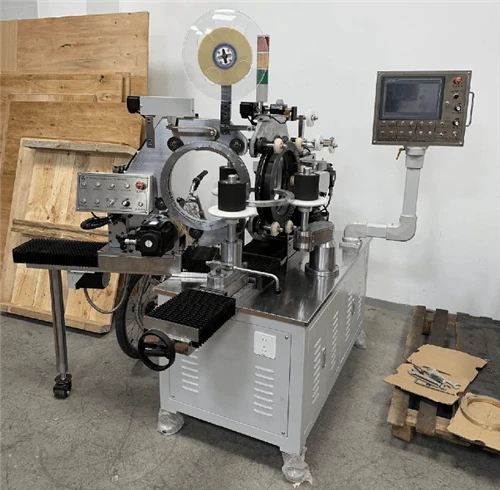
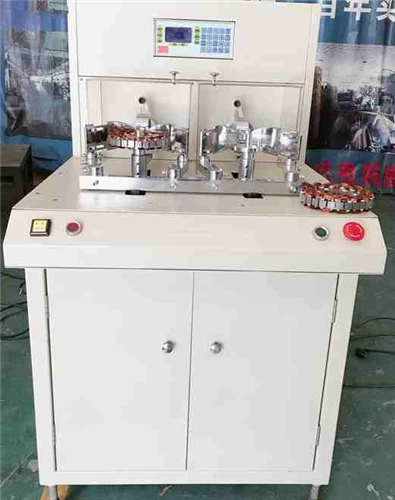
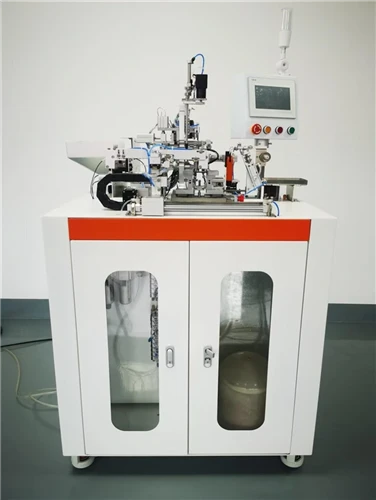
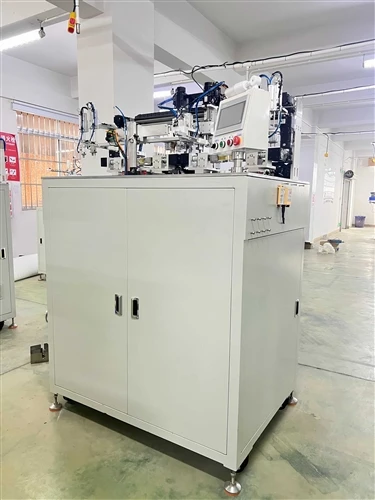
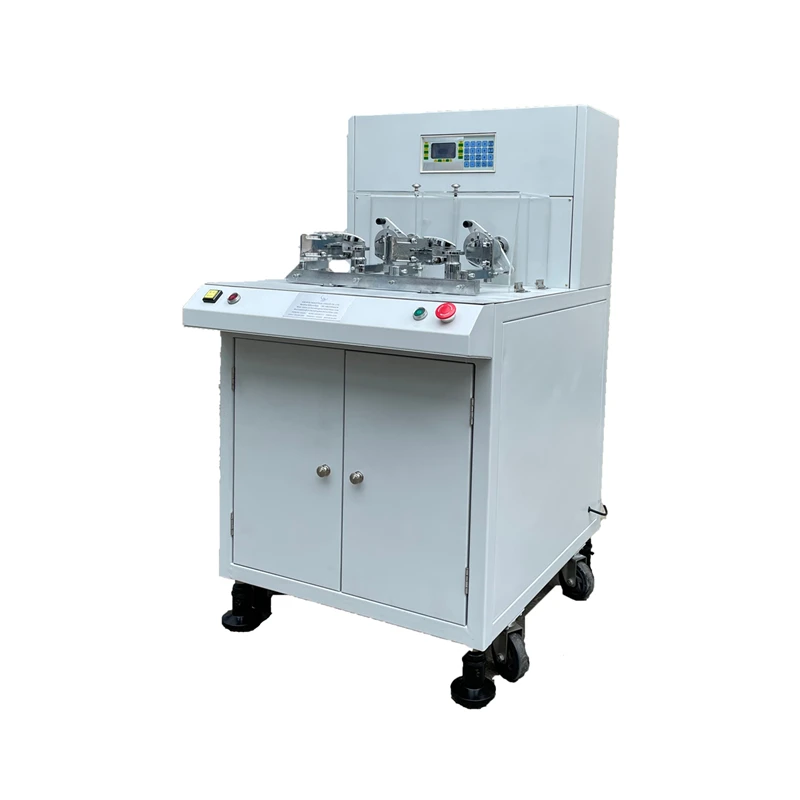
A good real-world example of how single wire and multi-wire winding requirements are addressed in practice is the ADSKX22-2 Ceiling Fan Winding Machine, designed for the outer winding of stator coils in ceiling fans, water pumps, and magneto stators.
5.1 Core Functions
During the winding process, the ADSKX22-2 automatically completes winding, arranging, turning, advancing, and retreating actions. It also supports full arrangement of large-diameter windings, which directly addresses one of the biggest challenges in stator production: keeping thick or multi-strand wires uniformly arranged in the slot instead of bunching or crossing.
5.2 CNC Control and Material Savings
Equipped with microcomputer CNC control, the machine allows quick data setting for winding turns and arrangement density, making it easy to adapt to different ceiling fan stator specifications.
Over long-term operation, its optimized winding paths can save 7–15% of enameled wire, reducing material waste while maintaining consistent winding quality-a meaningful cost saving for factories running high production volumes.
5.3 Training and After-Sales Support
Getting the most out of this kind of equipment also depends on operator training. Suppliers such as KIOXIA typically provide:
Experienced service engineers - technicians with around 10 years of experience trained specifically on the ADSKX22-2, capable of resolving issues such as stator alignment errors, wire tension fluctuations, and CNC program malfunctions.
Operational guidance - hands-on instruction covering the microcomputer control panel, stator clamping adjustments, wire arrangement parameter settings, and routine maintenance of winding spindles and wire guides, along with free consultation on production process optimization for different ceiling fan stator models.
Structured training resources - English manuals, model-specific instructional videos, and real-time online guidance covering CNC programming, automatic winding activation, troubleshooting, and preventive maintenance.
Backed by a 1-year warranty and machines built entirely from imported precision parts, this kind of support system helps ensure that whether a factory is running single wire or multi-wire parallel winding, the equipment performs reliably over its full service life.

6. Choosing the Right Method for Your Production Line
For low-power motors with simple winding requirements, single wire winding remains a cost-effective and straightforward choice. But for applications demanding higher current capacity, better heat management, and higher copper fill-such as ceiling fan stators, water pump stators, and generator stators-multi-wire parallel winding offers clear performance advantages, provided the winding machine is capable of maintaining precise multi-strand tension control.
Recommended Equipment
For manufacturers looking to handle both single wire and multi-wire parallel winding on ceiling fan stators with high precision and material efficiency, the ADSKX22-2 Ceiling Fan Winding Machine is worth considering:
You may be interested in: