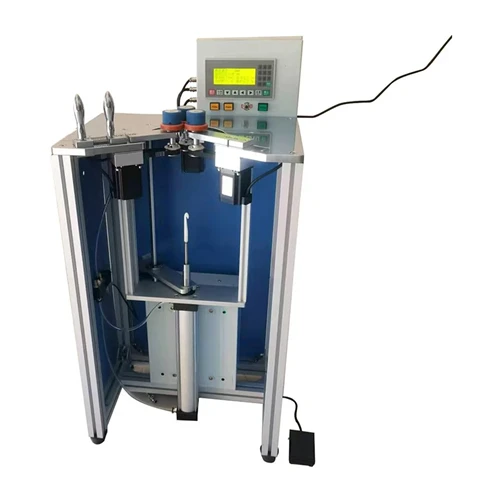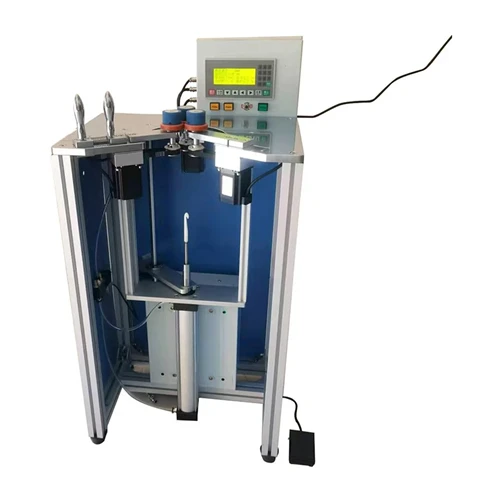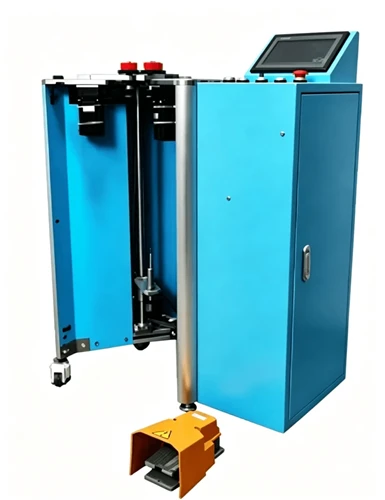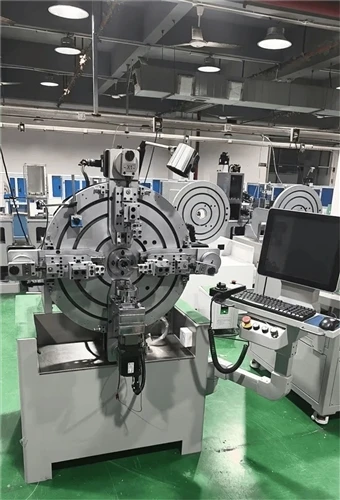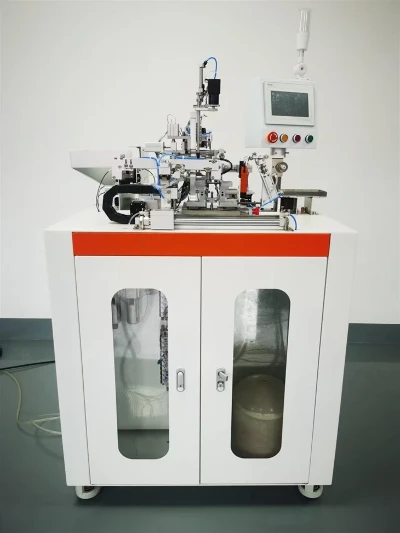


As a key mechanical device in modern electrical equipment manufacturing, stranded wire winding machines are widely used in the production of products such as wires and cables, electromagnetic coils, transformers, and motors. Their core function is to twist or wind multiple strands of wire into structurally stable bundles or coils according to specific process requirements through precise mechanical and electrical control. This ensures that they meet the conductivity, mechanical strength, and spatial layout requirements of various industrial scenarios.
From a technical perspective, a stranded wire winding machine typically consists of core modules such as a power system, transmission mechanism, bobbin rack, tension control system, and CNC unit. The power system provides the driving force required for mechanical operation and is commonly found in servo motors or stepper motors. Its speed and torque directly affect winding efficiency and accuracy.
The transmission mechanism is responsible for transmitting power to the winding spindle and stranding device. Motion conversion is achieved through a gearbox or synchronous belt, ensuring coordinated operation of all components. Tension control systems are key to ensuring winding quality. Sensors monitor wire tension in real time and dynamically adjust the payout speed using magnetic powder brakes, pneumatic tensioners, or servo control devices to prevent wire breakage or loosening between layers due to uneven tension. The CNC unit, integrated with a PLC (Programmable Logic Controller) or industrial computer, allows users to preset parameters such as the number of winding turns, interlayer reversal, and lay pitch. Processing deviations are corrected through closed-loop feedback, significantly improving production consistency and automation.
Wire winding machines are categorized into various types based on their application scenarios. For example, high-speed stranding machines are designed for high-volume stranding of fine wires, achieving stranding speeds of several thousand revolutions per minute and are suitable for conductor processing in communications cables or electronic components. Precision winding machines, on the other hand, focus on directional winding of tiny coils, such as inductors or micro-transformers for medical devices. They offer positioning accuracy of up to ±0.01 mm and support complex multi-layer layout patterns. Furthermore, for specialized materials (such as high-temperature superconducting wire or optical fiber composite cables), some models are equipped with thermostatic clamping devices or non-contact tension detection technology to accommodate diverse production needs.
In industrial practice, the performance of stranded wire winding machines directly impacts the reliability of end products. For example, in power transformers, the tightness and uniformity of the winding coils determine their short-circuit resistance and energy efficiency rating. In new energy vehicle drive motors, the winding accuracy of the enameled wire is crucial for electromagnetic conversion efficiency and heat dissipation. With the penetration of intelligent manufacturing technologies, modern stranded wire winding machines are increasingly integrating visual inspection, machine learning algorithms, and industrial Internet interfaces to enable fault self-diagnosis, production data traceability, and remote operation and maintenance, further driving the wire and cable industry towards high precision, high efficiency, and green development.
In summary, stranded wire winding machines are not only a vital branch of basic manufacturing equipment but also a core tool for optimizing the performance of electrical products. Their technological evolution continues to provide critical support for sectors such as new energy, electronic information, and high-end equipment manufacturing, demonstrating the industrial value of integrating precision machinery with automated control technologies.