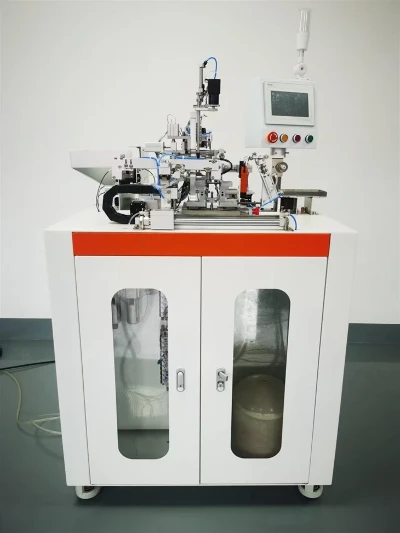


Summary: A hook winding machine is a toroidal winder that uses a hooked needle to pull each turn of wire through the center hole of the core. Use it when the wire is thick, the finished inner hole is small, or production is low-volume and varied.
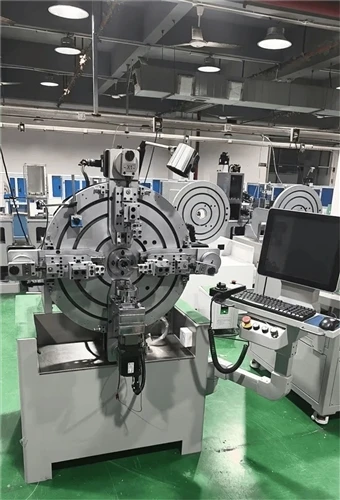
An automatic toroidal winding machine (shuttle or ring type) is faster on thin wire in large batches, but it needs enough room inside the core for its ring to pass and gives wire damage and instability a chance to appear. As a rule of thumb, choose a hook machine for thick wire in a tight hole, and choose a fully automatic machine for thin wire at high output.

I. What Is a Toroidal Coil Hooking Machine?
a. Definition
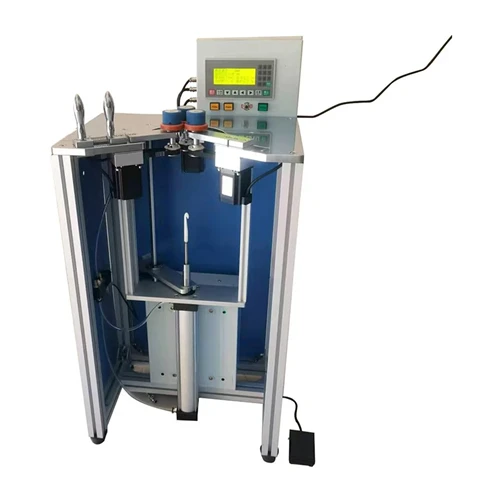
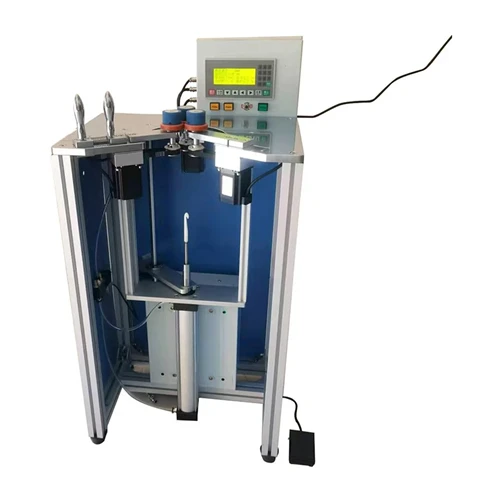
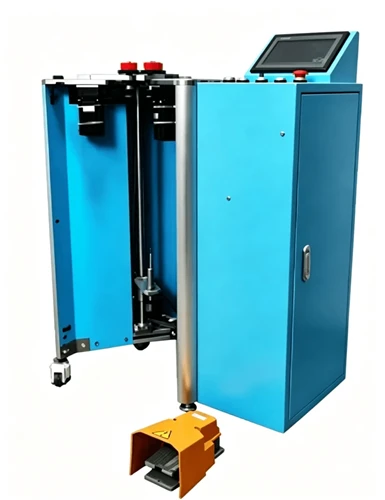
A toroidal coil hooking machine, also called a hook-type toroidal winding machine, is a semi-automatic toroidal winder machine. The operator mounts the core, and an electrically driven hook carries the wire through the center hole, around the core, and back for the next turn. The turn count, speed, and direction are controlled by the machine.
b. How the Hook Works
The hook picks up the wire on one side of the core, pulls it through the hole, and releases it on the other side. Because only a thin hook passes through the center, the machine does not need a large ring or shuttle to fit inside the core. This is why it performs well on cores with small inner holes.
c. Hook Winding Machine vs. Other Toroidal Winders
| Feature | Hook-type (semi-automatic) | Ring/shuttle type (automatic) |
|---|---|---|
| Wire thickness | Best for medium to very thick wire | Best for thin to medium wire |
| Space needed in the center hole | Small | Larger (the ring must fit through) |
| Risk of wire damage on thick wire | Low | Higher, because thick wire is bent hard around the ring |
| Output speed | Moderate | High |
| Loading and unloading | Manual | Often automatic |
| Best batch size | Small to medium, many specifications | Large, stable specifications |
II. When Should You Use Hook-Type Winding?
a. Thick Wire
Thick enamelled wire is stiff. A ring or shuttle forces it through a tight bend, which can scratch the insulation and leave hidden damage. A hook handles the same wire with a gentler path.
b. Small Finished Inner Hole
Each layer of wire reduces the free hole. A simple estimate of the finished inner diameter is:
ID_finished ≈ ID_core − 2 × n × d_o
where n is the number of layers and d_o is the outer diameter of the wire including enamel.
Worked example: A core with a 40 mm hole and 1.9 mm insulated wire, wound in 3 layers, leaves about 40 − 2 × 3 × 1.9 = 28.6 mm. A ring-type machine needs its ring to pass through this shrinking hole on every turn. By the last layer there may not be room.
c. Real Case: 1.8 mm Wire in a 26 mm Hole
One customer's product had a very small finished inner hole (about 26 mm) and very thick wire (1.8 mm). He wanted a fully automatic ring-type machine. We advised against it, for two reasons:
Wire damage. Forcing 1.8 mm wire around a ring scratches the enamel.
Not enough space. The inner hole was too small for the ring, and at this wire size the ring cannot take the load.
If someone insists on a ring machine here, they are betting on an unstable process, so we do not recommend selling or buying one for this job. The right choice was a semi-automatic electric hook machine. It winds 1.8 mm wire cleanly, and the finished coil looks neat and even. The lesson: do not chase full automation blindly. Choose by wire size, hole size, and real output needs.
Have a toroid with thick wire and a tight center hole? Send us your core size, wire diameter, and turns, and our engineers will recommend a winding solution. Contact KIOXIA today.
d. Small Batches and Frequent Changeovers
Hook machines change specification quickly. If you wind many different cores in small quantities, a hook winder machine often costs less per finished part than a high-speed automatic line that needs long setup.

III. How to Wind a Toroidal Transformer with a Hook Machine?
a. Calculate the Turns
Start from the induced voltage equation:
N = E × 10⁶ / (4.44 × f × Ac × B)
with E in volts, f in Hz, Ac (core cross-section) in mm², and B in tesla.
Worked example: E = 230 V, f = 50 Hz, Ac = 800 mm², B = 1.2 T gives N = 230 × 10⁶ / (4.44 × 50 × 800 × 1.2) ≈ 1,079 turns for the primary.
b. Choose the Wire
The copper area is A = π × d² / 4. A 1.8 mm wire has about 2.54 mm². At a current density of 3 A/mm², it carries roughly 7.6 A, so it suits a high-current secondary.
c. Estimate the Wire Length
The mean length of one turn is about MLT ≈ 2h + (OD − ID), where h is the core height.
Worked example: For OD 80 mm, ID 40 mm, h 30 mm, MLT ≈ 60 + 40 = 100 mm. Then 1,079 turns need about 108 m of wire, plus extra for build-up and leads.
d. Set Up and Wind
Insulate the core edges with tape or a coating.
Load the wire spool and set the tension.
Enter the turn count and speed.
Wind layer by layer, keeping turns tight and evenly spread.
Add interlayer insulation between primary and secondary, and check the finished inner diameter.
e. Check the Fill
The window fill (space factor) is K = N × A_cu / A_window. Keep it within a level your insulation class and cooling allow. Too high a value makes winding hard and raises the risk of wire damage. Insulation and safety requirements for power transformers are covered in standards such as IEC 61558, and enamelled wire requirements in NEMA MW 1000.
IV. Hook-Type or Automatic Toroidal Winding Machine: Which Should You Choose?
a. Decision Table
| Your situation | Better choice |
|---|---|
| Wire 1.0 mm and above, small finished hole | Hook winding machine |
| Thin wire, high volume, stable specification | Automatic toroidal winding machine |
| Many models, small batches | Hook winding machine |
| Need automatic loading and unloading | Automatic toroidal winding machine |
| Hole too small for a ring to pass | Hook winding machine |
b. Cost View
Automatic machines cost more and pay back only with steady, high-volume orders. A hook machine has a lower purchase price and a shorter setup time, which suits growing workshops.
V. What Are the Common Problems in Hook Winding?
| Problem | Likely cause | Fix |
|---|---|---|
| Scratched enamel | Sharp hook edge, too much tension | Polish the hook, lower the tension |
| Uneven turns | Poor guidance, speed too high | Adjust the wire guide, slow down |
| Wire slipping off | Insufficient core insulation or loose start | Secure the start, check the taping |
| Hole too small at the end | Layers underestimated | Recalculate with the ID formula above |
VI. Which KIOXIA Machine Should You Choose?
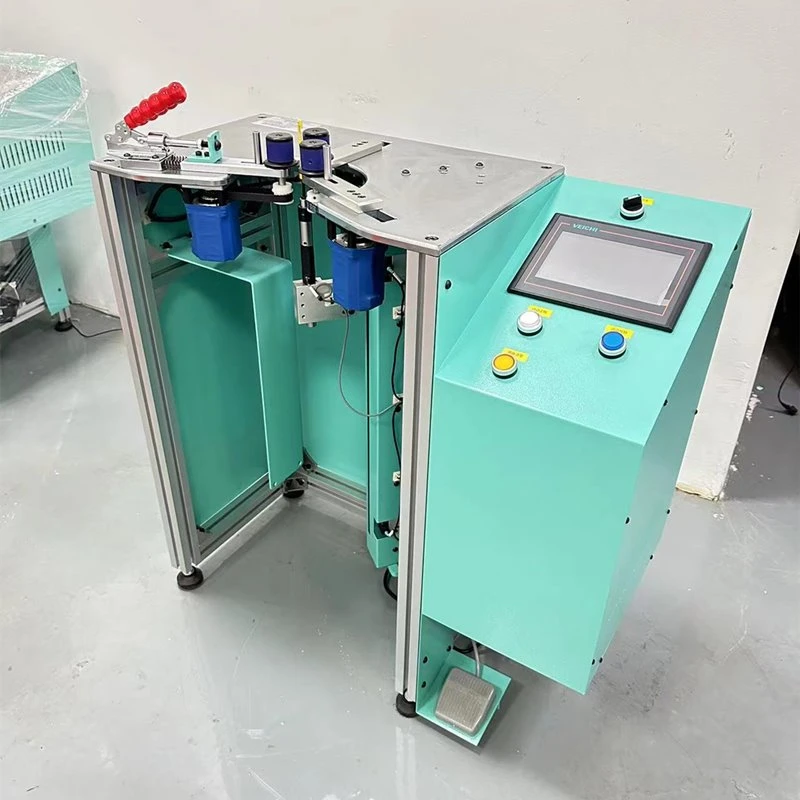
For thick wire and small finished holes, KIOXIA recommends the 9200C semi-automatic hook-type toroidal winding machine, the model we used for the 1.8 mm case above. For high-volume thin wire, KIOXIA also offers automatic toroidal winding machines. Share your core dimensions, wire diameter, turns, and daily output, and we will match the right machine to your product. See our full range of toroidal coil winding machines or contact KIOXIA for a recommendation.
You may be interested in:
Why Are High-Power Transformers More Likely To Use Flat Copper Wire Instead Of Round Copper Wire?
Toroidal Transformer Failure: Causes & Prevention
Key Machinery Required To Build A Semi-Automated Transformer Factory From Scratch
Semi Automatic Vs Fully Automatic Toroidal Winding Machine: Which Fits Your Output