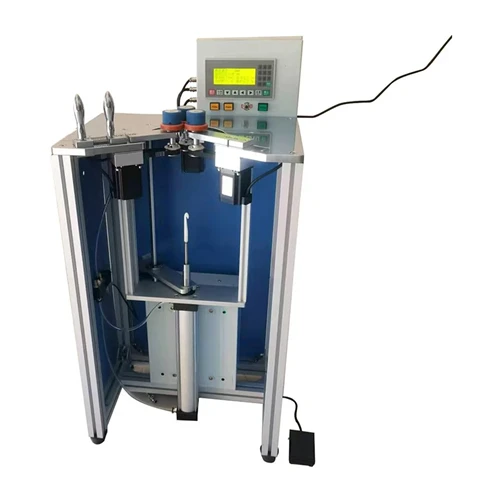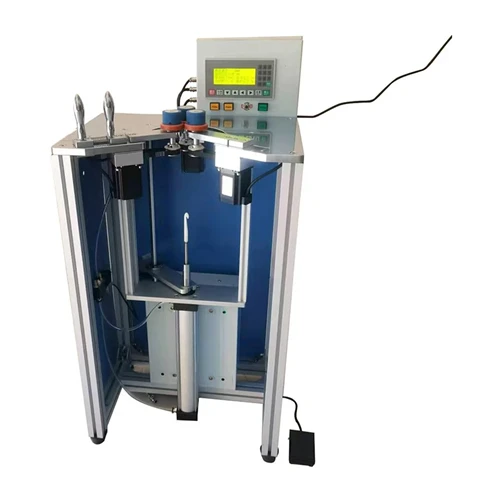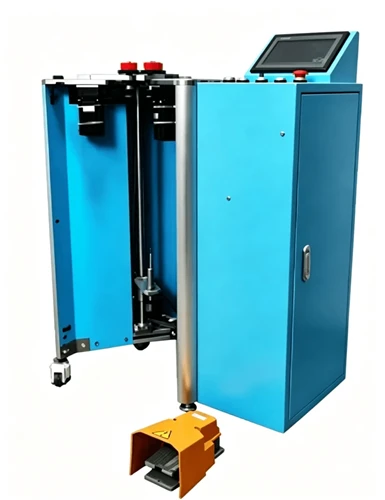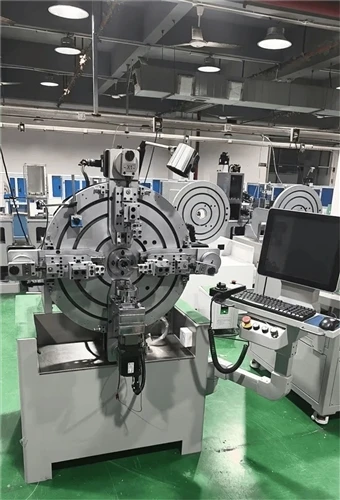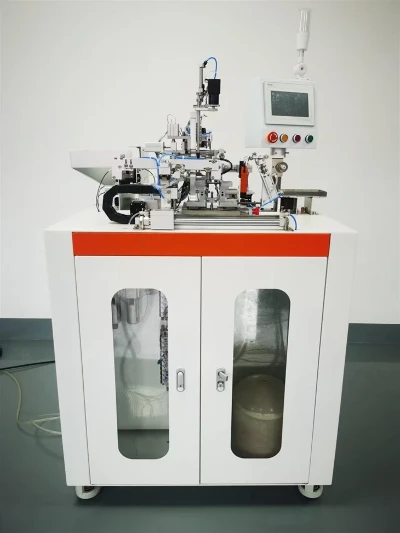


Winding machines are essential pieces of equipment used across various industries, including electronics, automotive, power systems, and appliances. Their primary function is to wind linear materials-such as copper wire, fiber, or resistance wire-onto a core, bobbin, or mandrel with precision.
Depending on the automation level, structural design, specific applications, and body layout, winding machines are categorized into several distinct types. Below is a comprehensive guide to understanding the different types of winding machines available in the industry.
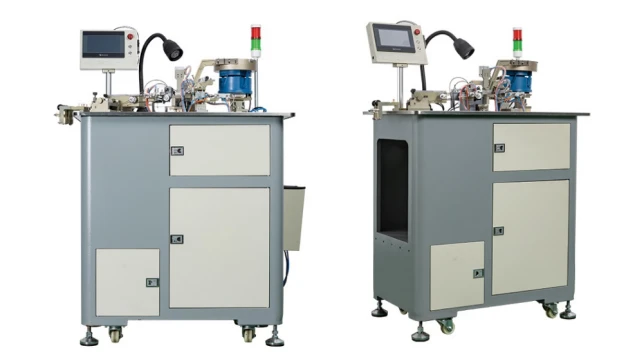
1. Classification by Automation Level
The level of automation determines the speed, precision, and labor required for the manufacturing process.
a.Manual Winding Machines
Manual winding machines rely entirely on human operation. The operator manually turns a crank or presses a foot pedal to rotate the spindle while guiding the wire by hand.
Best For: Small-scale production, prototyping, laboratories, and repair shops.
Characteristics: Low cost, simple structure, but highly dependent on operator skill.
b.Semi-Automatic Winding Machines
Semi-automatic machines combine human labor with motorized assistance. Typically, the machine handles the rotation of the spindle and counts the number of turns, while the operator manually guides the wire distribution or handles the loading and unloading of bobbins.
Best For: Medium-batch production.
Characteristics: Faster than manual machines, significantly reducing operator fatigue while remaining relatively affordable.
c.Fully Automatic & CNC Winding Machines
Fully automatic and Computer Numerical Control (CNC) winding machines require minimal human intervention. They utilize advanced programming to control the speed, tension, and traverse movement with extreme precision. They automatically wrap the wire, cut the material, terminate the ends, and handle the bobbin transitions.
Best For: Mass production environments and high-precision applications.
Characteristics: Extremely high efficiency, consistent quality, and the ability to store multiple winding programs for rapid product switching.

2. Classification by Winding Structure & Working Method (Core Industry Classification)
This is the most critical technical classification in the industry, defining how the machine physically manipulates the wire and the core.
a.Parallel Winding Machines (Spindle Winding Machines)
In a parallel winding machine, the workpiece (bobbin or core) is fixed onto a rotating spindle while the wire spool moves back and forth along a guide traverse to distribute the wire evenly. This matches the specifications typically found in standard industrial Wire Capacity Tables.
Applications: Widely used for winding square bobbins, speaker voice coils, inductors, and relay coils.
Subcategories:
By Spindle Count: Available in single-spindle, dual-spindle, 4-axis, 6-axis, and 8-axis multi-spindle configurations for mass production.
By Wire Thickness: Fine-wire types (handling 0.02–0.5mm enameled wire) and heavy-wire types (handling 0.5–3.0mm wire).
Representative Models: KXV Series Universal Bobbin Winding Machine.
b.Toroidal Winding Machines
Toroidal winders are specialized devices used to wind wire through the center of a doughnut-shaped (toroidal) iron core. Because of the closed circular geometry, these machines cannot use a standard rotating spindle. Instead, they utilize a split-ring mechanism to store wire and pass it repeatedly through the center hole.
Applications: Toroidal cores, common mode chokes, and toroidal transformers.
Subcategories:
Shuttle Type: Ideal for fine-wire toroidal inductors used in small consumer electronics.
Fly-Fork (Magazine) Type: Engineered for high-power toroidal transformers and photovoltaic inductors, capable of handling thick wire and large magnetic rings.
c.Fly-Fork Stator Winding Machines
Specifically designed for electric motors, these machines feature a high-speed "fly-fork" mechanism that rapidly feeds copper wire directly into the internal or external slots of a motor stator.
Applications: Brushless motors (BLDC), fan motors, and new energy vehicle (EV) drive motor stators. Available in both internal winding and external winding configurations.
d.Rotor Winding Machines
These machines are specialized for winding coils onto the rotors of stepper motors and brushed DC motors. They are typically integrated into automated production lines alongside commutator fusing and pressing processes.
e.Horizontal Large-Coil Winding Machines
Built for heavy-duty industrial applications, these machines wind thick copper wire or strips integrated with multi-layer insulation paper.
Applications: Large power transformers and high-capacity reactors used in industrial electrical grids.

3. Classification by Product Application
When requesting quotes or sourcing equipment, clients frequently search for machines based on the specific component they need to manufacture.
Voice Coil / Speaker Winding Machines: Highly represented by the GW Series. They specialize in winding voice coils for speakers, earphones, and audio equipment, requiring micro-fine wire handling and ultra-precise tension control.
Transformer Winding Machines: Used for EI/square low-frequency transformers and high-frequency miniature transformers. High-end models support automatic interleaving of insulation films between wire layers.
Inductor Winding Machines: Tailored for SMD inductors, common mode chokes, power inductors, and rod inductors, achieving high-precision winding with ultra-fine wires.
Solenoid Valve / Relay Coil Winding Machines: Designed for dense, multi-layer winding on small bobbins. They feature highly stable tension systems to ensure zero-turn error tolerances.
Motor Stator / Rotor Winding Machines: Comprehensive winding equipment sets tailored for home appliance motors, new energy vehicle drive motors, and industrial servo motors.
Heating Wire Winding Machines: Specialized for winding resistance wire around cores to create heating elements used in electric heating tubes, hairdryers, and appliances.

4. Classification by Body Layout
The structural orientation of the machine dictates its footprint and weight-bearing capacity.
Vertical Winding Machines (Desktop/Benchtop Type): Compact, small-footprint machines typically placed on a workshop table. They are the mainstream product choice for manufacturing electronic components, voice coils, and small inductors.
Horizontal Winding Machines (Floor-Standing Type): Heavy-duty, large-scale machines laid out horizontally. They are built with robust frames to support massive workpieces, such as large power transformer coils and high-power motor windings.

5. Universal vs. Dedicated Winding Machines
Understanding the difference between flexibility and raw volume throughput is essential when configuring a factory floor.
Universal Winding Machines (e.g., KXV Series): These machines can produce a wide variety of different coils simply by changing the tooling molds and switching the software program. They are the absolute first choice for small-to-medium enterprises (SMEs), prototyping, and small-batch production.
Dedicated (Specialized) Winding Machines: Customized for a single, specific product type. They are integrated into large-scale factory assembly lines to maximize speed and efficiency, offering unmatched throughput for high-volume manufacturing.

Recommendation & Sourcing
Selecting the appropriate winding machine requires balancing your production volume, wire capacity requirements, and specific coil geometry. Investing in robust, high-precision machinery ensures optimal production efficiency and flawless component performance.
For industry-grade winding solutions, comprehensive technical support, and premium machinery, we highly recommend exploring the official KIOXIA website to find the perfect parallel, toroidal, or specialized winding equipment for your factory line.