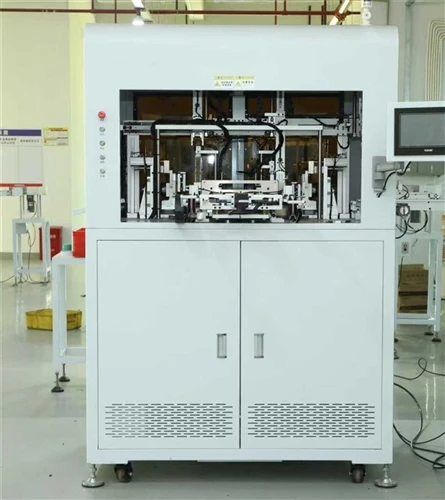
In the manufacturing of transformers and inductive components, the choice of winding method has a direct impact on electrical performance, production efficiency, and long-term reliability.
As precision electronic devices demand ever-greater coil consistency, single layer winding is once again drawing attention across the industry.
This article examines the technical principles behind single layer winding and looks at how KIOXIA Light Ring Equipment Group Co., Ltd. is applying automated winding technology to support this process.

1.Technical Advantages of Single Layer Winding
a.More Stable Electrical Performance
By arranging the wire evenly in a single layer, single layer winding avoids the interlayer capacitance and parasitic inductance issues that come with overlapping multi-layer structures.
Compared with multi-layer windings, a single-layer structure effectively reduces losses under high-frequency operating conditions and improves the Q factor of the coil - a critical advantage for precision transformers, inductors, and similar components.
b.Better Heat Dissipation and Withstand Voltage
Because the wire is not stacked in multiple layers, heat generated in a single-layer winding has a shorter path to travel before reaching the bobbin surface, reducing the risk of localized overheating.
At the same time, the elimination of interlayer voltage differences helps improve the coil's voltage withstand capability, extending the product's service life.
c.Wire Placement Accuracy Directly Affects Yield Rate
Single layer winding places extremely high demands on wire alignment precision - even a slight misalignment within the same layer can be magnified, affecting the stability of subsequent winding.
As a result, wider adoption of single layer winding largely depends on the control precision and intelligence level of the winding equipment itself.

2.Equipment Intelligence Driving the Upgrade of Single Layer Winding
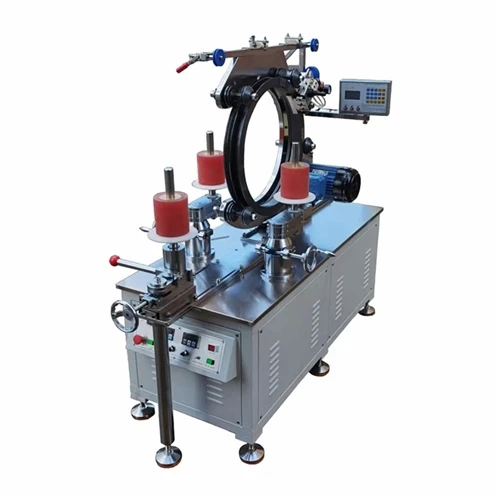
Achieving high-quality single layer winding is difficult to accomplish through traditional mechanical control alone. As a company focused on the research and manufacturing of winding equipment, KIOXIA Light Ring Equipment Group has systematically upgraded its automatic winding machines to address wire alignment precision, operational stability, and ease of use.
a.Core Features
On the control side, the equipment adopts a 32-bit ARM control chip together with a CPLD, delivering faster calculation speed and effectively reducing wire arrangement errors. All input and output signals are photoelectric isolated, ensuring stable operation, while a full Chinese liquid crystal display keeps the interface easy to operate.
For the winding process itself, the machine supports intelligent input of the winding point and wire width, along with intelligent deceleration during wire commutation to ensure faster line alignment and greater torque. The spindle climbing time can be set, spindle speed can be changed in real time, and the system includes overspeed tracking.
b.Production Safety and Stability
Sudden power failure is one of the most common causes of scrapped coils in actual production. To address this, the equipment automatically saves winding data in the event of a power failure, effectively avoiding coil scrap caused by an unexpected shutdown.
In addition, the position of the wire rack can be adjusted manually during the winding process, allowing operators to fine-tune wire placement as needed.
In terms of hardware, the equipment's bearing and belt are imported from Japan, the inverter and lead rod are imported from Taiwan, and the machine body uses a cast iron box - together ensuring stable and reliable performance.

3.Broad Scope of Application
This type of winding equipment is suited to a wide range of coil types, including medium-size transformers, solenoid valve coils, multi-tap coils, layer wrapping tape coils, precision flat winding coils, coils with larger diameters, and hot silk coils, meeting the production needs of products with different specifications.
4.Software Functions: Making Single Layer Winding More Precise and Controllable
a.Flexible Bobbin Parameter Settings
The software system supports input of basic bobbin parameters, including the start winding point, row width, row spacing, number of winding turns, start slow train, stop slow train, spindle positioning, spindle low speed, spindle high speed, spindle direction, line direction, and layer stop.
During the winding process, the position of the wire rack can be manually adjusted to achieve fine tuning of precise wire arrangement; this feature can be customized on request.
b.Large-Capacity Data Storage
The system provides 1,450 units of data storage space and can save up to 999 sets of bobbin parameters. Once a set of bobbin parameters has been debugged, it can be permanently saved. When switching to a different product, operators only need to replace the corresponding fixture and select the corresponding bobbin parameters, significantly shortening changeover time.
c.Continue-Winding-After-Power-Failure Function
If power is suddenly lost during winding, the system saves the final winding state. After power is restored, pressing the start button allows winding to continue from where it left off, avoiding material waste caused by an unexpected outage. Special functions can also be customized in the software according to specific customer requirements.

5.Recommended Model
For companies looking to improve the consistency and efficiency of their single layer winding process, KIOXIA's single-axis winding machine is worth considering. This model integrates the intelligent control system and stable hardware configuration described above, making it well suited for the automated production of a variety of small and medium-sized coils, and a practical choice for upgrading single layer winding processes.
You may be interested in:
What Are Current Transformer Testers And How Do They Work in Power Systems?
What Are The Different Types Of Winding Machines?
What Is The Difference Between Parallel And Series Winding?