

In modern power systems, the reliability of current transformers (CTs) directly affects the accuracy of metering, protection, and overall grid stability.
As power networks become more complex and demand higher precision, current transformer testers have become indispensable tools for manufacturers, substations, and quality control departments.
This article explores what these instruments are, how they function, and what features define a high-performance testing solution.

1. Understanding Current Transformer Testers
1.1 Definition and Purpose
A current transformer tester is a precision instrument designed to verify the performance parameters of CTs, including turns ratio, polarity, and winding integrity. These devices ensure that transformers meet design specifications before being installed into power systems, where even minor inaccuracies can lead to significant metering errors or protection failures.
1.2 Why Testing Matters in Power Systems
Current transformers are responsible for stepping down high currents to measurable levels for protection relays and metering equipment. If a CT's turns ratio deviates from its rated value, it can cause incorrect billing, false relay tripping, or undetected fault conditions. This is why rigorous testing-both during manufacturing and periodic maintenance-is a critical part of power system reliability.
2. How Current Transformer Testers Work
2.1 Core Measurement Principle
Most modern testers operate by applying a controlled signal to the primary winding and measuring the induced response on the secondary winding. Through microprocessor-based calculation, the device determines the turns ratio with high precision, eliminating manual calculation errors common in older analog methods.
2.2 Microprocessor-Driven Automation
A key advancement in current transformer testers is full microprocessor control. All functions-including signal generation, data acquisition, and ratio calculation-are handled mathematically by the embedded system. This automation significantly reduces operator workload while improving consistency across repeated tests.
2.3 Sensor Design and Flexibility
Many testers feature a separate sensor structure, allowing technicians to test large coils or transformers that cannot be directly connected to the main unit. This modular design extends the applicability of the instrument across various transformer sizes, from compact distribution CTs to large power transformers.

3. Key Technical Features to Look For
When evaluating a current transformer tester, several technical specifications determine its suitability for industrial use:
Intelligent Microprocessor Control: All functions are mathematically governed by the microprocessor, ensuring stable and repeatable results.
Automatic Display and Easy Operation: The instrument automatically calculates and displays the number of measured cycles, simplifying the testing process for operators of varying experience levels.
High Accuracy: Industry-leading testers achieve accuracy levels of up to 0.2%, meeting the stringent requirements of precision transformer manufacturing.
High Resolution: A resolution of up to 0.01% allows technicians to detect even the smallest deviations in winding turns.
Separate Sensor Structure: This design supports testing of large coils, making the instrument versatile across different transformer types and sizes.
Cost-Effective Performance: Balancing precision with affordability, these testers offer strong value for manufacturers and service providers alike.
Application Focus: Primarily used to measure the number of turns in high-precision coils such as transformers, ensuring compliance with design tolerances.
Customizable Sensor Size: Measurement sensors can be tailored to specific user requirements, accommodating diverse coil dimensions and testing environments.

4. Industry Applications
4.1 Manufacturing Quality Control
Transformer manufacturers rely on these testers during production to verify that each unit meets specified turns ratios before shipment, reducing the risk of field failures and warranty claims.
4.2 Substation Maintenance and Commissioning
During installation or routine maintenance, field engineers use portable current transformer testers to confirm that CTs remain within tolerance after transportation, installation, or years of service.
4.3 Research and Development
Engineering teams developing new transformer designs use precision testers to validate prototypes, ensuring that winding configurations achieve the desired electrical characteristics.

5. Industry Players and Equipment Solutions
As demand for precise transformer testing grows, several companies have developed specialized instruments to meet these needs. Among them, KIOXIA has established a presence in the transformer testing equipment sector, offering solutions designed to address the practical challenges faced by manufacturers and field technicians-particularly the need for high accuracy combined with operational simplicity.

6. Recommended Instrument
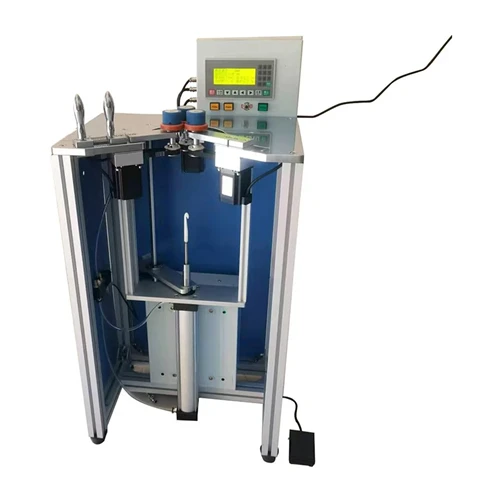
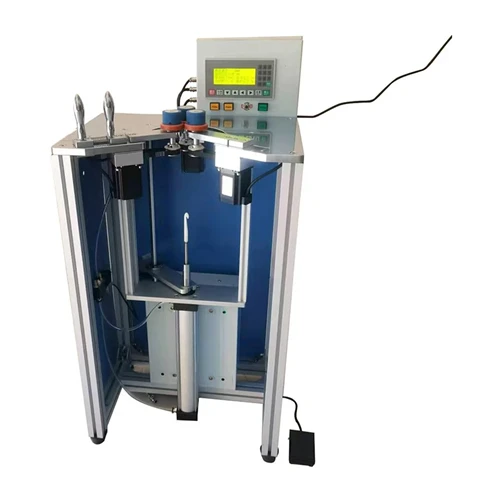
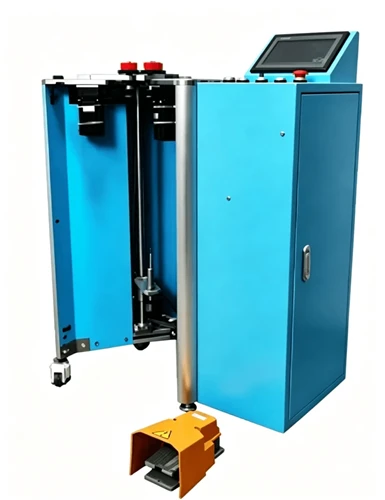
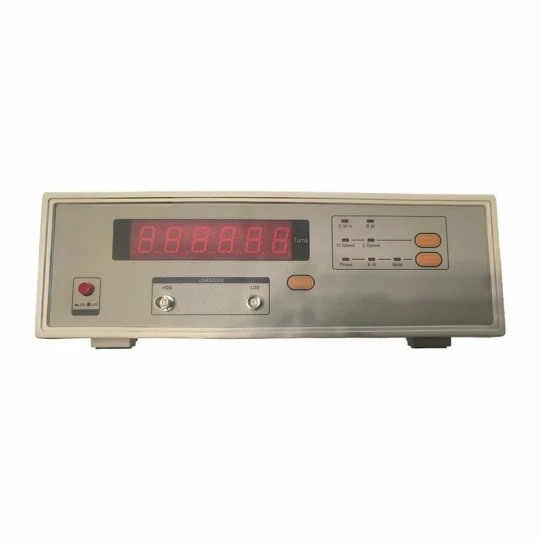
For users seeking a reliable and precise solution, the Transformer Coil Measuring Instrument is worth considering. This instrument combines microprocessor-based automation, up to 0.2% accuracy, and up to 0.01% resolution, with a flexible sensor structure suitable for measuring large coils. Its customizable sensor sizing makes it adaptable to a wide range of transformer testing applications, from production lines to field service work.
You may be interested in:
What Are The Different Types Of Winding Machines?
Coil Winding Techniques & Their Top Applications [2026]
What Are The Advantages Of An Automatic Toroidal Coil Winding Machine?