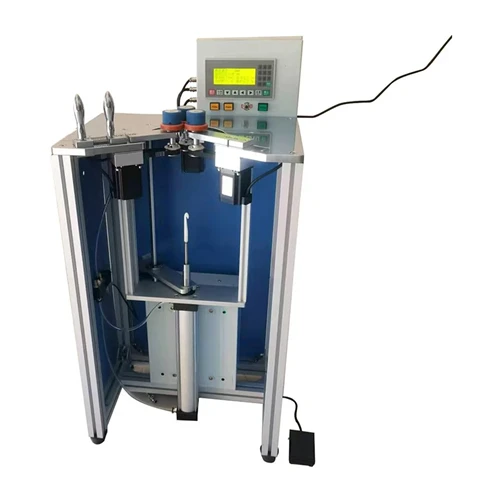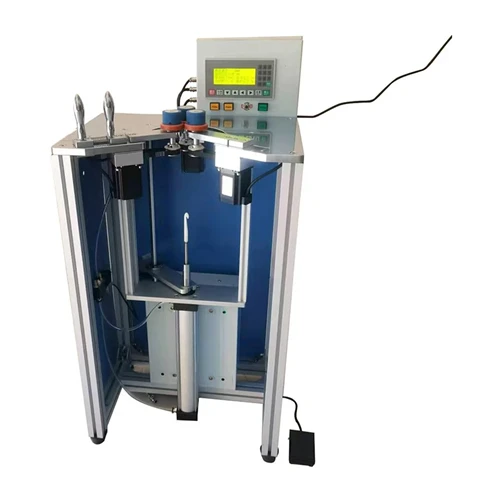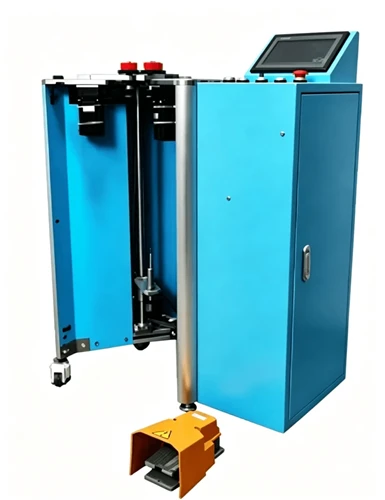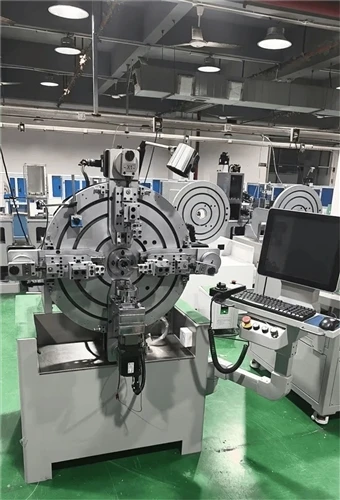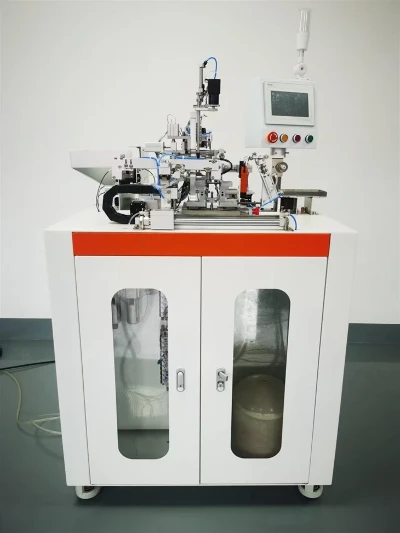


As core testing equipment for the manufacturing, operation and maintenance of wound components such as motors, transformers and inductors, the winding tester serves as a critical safeguard for the insulation reliability and operational stability of electrical equipment.
With the expansion of the global new‑energy industry and the upgrading of intelligent manufacturing, winding testing technology continues to innovate, the market size grows steadily, and it is rapidly developing toward high precision, intelligence and multi‑scenario adaptability, becoming an indispensable key link in the electrical manufacturing industrial chain.

I. Industry Landscape: Market Expansion and Structural Upgrading
Globally, the market size of electrical coil testers reached USD 447.8 million in 2025 and is projected to rise to USD 643.9 million by 2035, with a ten‑year compound annual growth rate (CAGR) of 3.7%. Testing demands from downstream motors, transformers and new‑energy drive equipment act as the core growth driver.
The Chinese market enjoys a more remarkable growth rate: the market size of wound component testers hit CNY 4.86 billion in 2025, a year‑on‑year increase of 12.3%, outperforming the overall average growth rate of 9.7% for industrial automatic testing equipment.
The demand structure features obvious characteristics of "new‑energy‑led and traditional upgrading". Testing demands related to new‑energy vehicles account for 38.5%, industrial motors and transformers together take up 32.1%, consumer electronics (high‑frequency inductors, magnetic coils) 16.4%, and emerging sectors including rail transit and medical equipment 13.0%.
Geographically, the Yangtze River Delta, Pearl River Delta and Beijing‑Tianjin‑Hebei regions occupy over 90% of the national market share by virtue of industrial cluster advantages, emerging as core production and sales hubs for winding testers.
Structural supply‑demand contradictions remain prominent. The localization rate of high‑end precision equipment is less than 22%, and core components such as high‑bandwidth sensors and high‑speed ADCs rely on imports, resulting in long delivery cycles and high costs for high‑end products.
Low‑end products suffer from severe homogenization with an inventory backlog rate exceeding 35%. The industry urgently needs capacity optimization and value upgrading through technological innovation.

II. Core Technology: Classification and Working Principles of Winding Testers
Winding testers feature diverse categories. Classified by testing functions, principles and voltage levels, they fall into six core types, covering full‑scenario needs from basic parameter measurement to precision insulation testing, and suiting the inspection of various wound components including 100W‑2000W transformers, thick‑to‑fine wires (AWG12‑AWG26), silicon steel and ferrite toroids.
Impulse Winding Tester (Mainstream Core Model)Core functions: Detect inter‑turn short circuits, inter‑layer insulation defects, winding disconnections and cross‑wire short circuits via non‑destructive testing; standard equipment for transformer and motor winding production.Working principle: Apply identical high‑voltage pulses to standard and tested coils to form RLC parallel resonance.
Tiny insulation defects as low as 1‑2 turns of short circuits can be accurately identified by comparing differences in damped oscillation waveforms.Voltage levels: 3kV (for 100‑500W transformers, AWG26 fine wires), 5kV (for 500‑1500W transformers), 10kV (for 2000W heavy‑duty transformers with AWG12 thick wires).
DC Resistance TesterCore functions: Measure DC resistance and balance ratio of windings to judge cold solder joints, disconnections, abnormal turns and poor connector contact.Application scenarios: Basic parameter verification after winding, balance testing of windings for high‑power transformers.
Turns Ratio & Turns TesterCore functions: Directly measure coil turns, turns ratio and voltage ratio to verify whether winding turns meet design standards.Application scenarios: Precision turn inspection for mass production of transformers and current transformers.
LCR/Transformer Comprehensive TesterCore functions: Measure inductance (L), capacitance (C), resistance (R), leakage inductance, exciting current and losses, fully covering electrical performance parameters of transformers.Application scenarios: R&D testing and full‑performance inspection of finished products, suitable for high‑frequency inductors and switching power supply transformers.
Hipot/Insulation TesterCore functions: Measure withstanding voltage and insulation resistance between windings‑to‑ground and inter‑windings, detecting insulation skin damage and creepage risks.Application scenarios: Insulation safety inspection before delivery, withstanding voltage verification for high‑voltage transformers and motor windings.
Winding Deformation TesterCore functions: Detect iron core displacement, loose windings and winding deformation via frequency response method; essential for operation and maintenance of high‑power transformers.Application scenarios: Deformation testing for heavy‑duty transformers above 2000W after transportation and during operation.

III. Technological Trends: Intelligence, High Precision and Multi‑Channel Adaptability
High Precision & High Sampling Rate: Mainstream equipment achieves a sampling rate of 100MSa/s, while high‑end models can be customized up to 200MSa/s. Equipped with 8‑bit resolution and 6500‑byte sampling depth, it accurately captures tiny insulation defects with test repeatability error controlled within ±1.0%.
Intelligence & Automation: Equipped with a 7‑inch high‑definition touch screen and bilingual Chinese‑English interface, it supports automatic waveform comparison, parameter storage and fault alarm. Integrated with the OPC UA protocol, it adapts to automatic production lines to realize real‑time upload and traceability of test data.
Multi‑Channel & Modular Design: Expanded from single‑channel to 2/4/8/40‑channel configurations, supporting synchronous testing of multiple coils for three‑phase motors and multi‑winding transformers. Modular interchangeable test modules suit testing of thick/fine wires and large/small toroids.
Multi‑Function Integration: Combines impulse testing, corona analysis, destructive testing, degaussing pulses and other functions. It can test inter‑turn insulation as well as evaluate the ultimate withstanding voltage of insulation, meeting full‑process demands of R&D, production and maintenance.

IV. Product Recommendation: KX‑IT15 Series Impulse Winding Tester
Among various winding testers, the KX‑IT15 Series Impulse Winding Tester stands out with precise testing performance, flexible configuration and strong adaptability, making it an ideal choice for inspecting 100W‑2000W transformers and wound components with thick‑to‑fine wires.
Its core advantages are prominent:
Wide Voltage Adaptability: Available in 3kV, 5kV and 10kV versions, with adjustable pulse voltage from 100V to 10000V in 10V steps, perfectly covering wire gauges from AWG12 (2.05mm) to AWG26 (0.40mm) and 100W‑2000W transformer testing requirements.
High‑Precision Testing: 100MSa/s sampling rate, supporting four waveform comparison modes including area, area difference, corona and phase difference. Inter‑turn short‑circuit detection rate ≥99.5% with test repeatability error of ±1%.
Flexible Configuration: Expandable to 2/4/8 channels for multi‑winding testing; compatible with HANDLER, RS232C, USB and other interfaces for integration into automatic winding machine production lines, with a test speed of 15 times per second.
User‑Friendly Functions: 7‑inch 800×480 high‑definition display supports waveform zooming, 32‑time standard waveform averaging, automatic standard collection, destructive testing and degaussing pulses, balancing testing precision and operational convenience.
Compact & Durable: Compact body of 400mm×132mm×300mm with a weight of only 8.0kg, suitable for fixed workshop use and on‑site inspection with strong environmental adaptability.
The KX‑IT15 Series Impulse Winding Tester perfectly matches the supporting needs of the KXV‑12A‑1 winding machine, covering winding testing for heavy‑duty shuttles (AWG12 thick wires) and small precision shuttles (fine wires, small toroids). It serves as core equipment for transformer manufacturers to control winding quality and improve product reliability.