


Coil winding machines are precision equipment, and even small deviations in tension, alignment, or calibration can lead to wire breakage, uneven coils, and higher scrap rates.
Understanding the most common failure points - and how to diagnose and prevent them - helps manufacturers keep production lines running smoothly and reduce costly downtime.
This guide walks through the causes of wire breakage, calibration steps, preventive maintenance routines, and a troubleshooting checklist you can use on the shop floor.

I. What Causes Wire Breakage in Coil Winding Machines?
Wire breakage is one of the most frequent and costly problems in coil winding, since a single break can stop production, waste material, and damage the coil in progress.
a. Tension-related causes
Excessive or unstable tension is the leading cause of wire breaks. When the tensioner is set too tight, or when tension fluctuates because a dancer arm, load cell, or spring has drifted out of calibration, the wire is placed under stress it cannot handle. This is especially common with fine-gauge magnet wire, where even small tension spikes are enough to snap the strand.
b. Wire quality and mechanical guide issues
Wire breaks can also come from the wire itself - brittle spots, inconsistent diameter, or enamel defects from the supplier - as well as from the machine side, such as burrs or sharp edges on guides, worn rollers, or a spool that isn't feeding smoothly. Rough handling during spool changeovers is another common contributor.
| Cause of Wire Breaks | Typical Symptom | Recommended Fix |
|---|---|---|
| Excessive tension setting | Wire snaps mid-winding | Recalibrate tensioner to spec for wire gauge |
| Worn or misaligned guide | Repeated breaks at same point in cycle | Inspect and replace guide, check alignment |
| Poor wire quality | Random breaks across different runs | Switch supplier or inspect incoming wire |
| Sharp edges/burrs on rollers | Fraying before full break | Polish or replace affected components |
| Improper spool feed | Breaks during high-speed sections | Adjust spool brake tension, check spindle |
II. How Do You Calibrate a Coil Winding Machine?
Calibration keeps tension, turns counting, and traverse motion within the tolerances the coil design requires. Skipping calibration is one of the most common reasons winding problems reappear after a repair.
a. Tension system calibration
Start by zeroing the tension sensor with no wire loaded, then run a known wire gauge through the system and compare the displayed tension to a handheld tension meter. Adjust the tensioner's spring or electronic control until the readings match the target value for that wire size, and repeat the check at a few points across the spool diameter, since tension can drift as the spool empties.
b. Spindle, sensor, and traverse calibration
Beyond tension, confirm that the turns counter matches a manually counted sample coil, that the spindle stops at the correct orientation, and that the traverse mechanism moves in sync with spindle rotation (the "electronic gear" relationship between the two axes). Any lag between these two motions shows up as uneven pitch or overlapping wire.
| Calibration Step | Tool Needed | Frequency |
|---|---|---|
| Zero tension sensor | Tension meter | Before each new wire batch |
| Verify turns count | Manual sample coil | Weekly or after changeover |
| Check spindle stop position | Visual/encoder check | Monthly |
| Sync traverse-spindle timing | Test run + inspection | After maintenance or belt change |
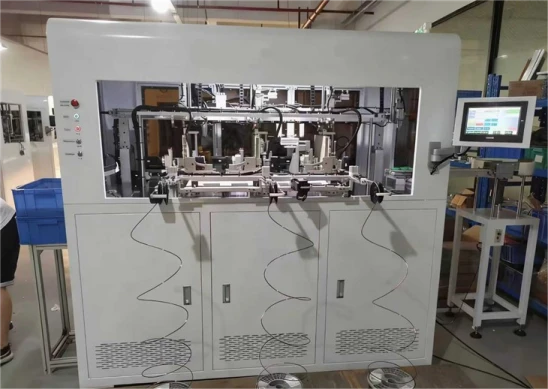
III. How Can You Prevent Wire Breakage?
Prevention is far cheaper than repeated troubleshooting, and most breakage-prevention steps are simple habits built into daily operation.
a. Process-level prevention
Set tension according to the wire manufacturer's spec rather than by feel, inspect wire guides and rollers for burrs before each production run, and avoid abrupt speed changes that spike tension momentarily. Using a tension control device with feedback (rather than a fixed mechanical brake) helps the system self-correct as the spool diameter changes.
b. Handling and environment
Store and handle wire spools carefully to avoid kinks or surface damage before they even reach the machine, and keep the work area free of dust and debris that can abrade the wire as it feeds. High humidity can also weaken insulation over time, so climate control matters more than operators often expect.
IV. How Can You Reduce Coil Winding Scrap Rate?
Scrap usually comes from the same root causes as wire breakage and tension problems, but reducing it requires looking at the process as a whole rather than fixing issues one at a time.
a. Tighten process controls
Standardize tension and speed settings per coil type so operators aren't adjusting by trial and error, and lock in traverse and turns-count parameters once a job is validated. Small, undocumented adjustments between shifts are a common hidden source of scrap.
b. Build in inspection points
Adding an in-process check - visual or automated - after the first few coils of a run catches a drifting setting before it produces a full batch of defective parts. Insulation resistance testing on a sample basis is also useful for catching insufficient insulation before coils move further down the line.
V. What Should a Coil Winding Machine Repair Guide Include?
A useful repair guide is organized by symptom, so an operator can move quickly from "what's happening" to "what to check."
a. Diagnosis by symptom
Group problems by how they present - wire breaking, coils looking loose or uneven, abnormal noise or vibration, or turns-count errors - since each symptom points to a different subsystem (tension, mechanical wear, or sensors/controller).
b. Repair steps and escalation
For each symptom, the guide should list the checks an operator can perform (tension setting, visual inspection of guides, cleaning debris) before escalating to a technician for issues like bearing wear, sensor faults, or controller errors that require disassembly.
| Symptom | First Checks | When to Call a Technician |
|---|---|---|
| Frequent wire breaks | Tension setting, guide condition | Breaks continue after recalibration |
| Loose or uneven coils | Tensioner wear, calibration | Tensioner spring/electronics need replacement |
| Wobble or vibration | Spindle mounting, bearing wear | Bearing replacement required |
| Turns-count error | Sensor connection, manual recount | Controller or sensor fault |
| Abnormal noise | Debris, loose components | Persistent noise after stopping and inspecting |

VI. What Does Winding Machine Preventive Maintenance Involve?
Preventive maintenance is what keeps the issues above from happening in the first place, and it works best on a defined schedule rather than an as-needed basis.
a. Routine cleaning and inspection
Guides, rollers, and tension pads collect dust and debris that can scratch wire and throw off tension readings, so regular cleaning and polishing of contact surfaces should be part of every shift or daily routine.
b. Scheduled component checks
Wear parts - tensioner pads, felt inserts, sensors, dancer arms, belts - don't last indefinitely, and replacing them on a schedule avoids the unplanned downtime caused by a sudden failure mid-run.
| Maintenance Task | Suggested Frequency |
|---|---|
| Clean guides, rollers, tension pads | Daily |
| Inspect wire path for burrs/wear | Weekly |
| Check and recalibrate tension system | Weekly or per batch |
| Inspect belts, bearings, and gears | Monthly |
| Full sensor and controller check | Quarterly |
VII. What Is a Coil Winding Troubleshooting Checklist?
Having a short checklist on hand lets operators work through the most common causes systematically instead of guessing.
a. Before starting production
Confirm tension is calibrated for the current wire gauge, check that guides and rollers are clean and free of burrs, verify the spool feeds smoothly, and confirm turns count and traverse settings match the job specification.
b. If a problem occurs mid-run
Stop the machine, identify the symptom (break, looseness, noise, count error), check the relevant subsystem from the repair guide above, and only resume once the root cause - not just the symptom - has been addressed.
| Checklist Item | Status |
|---|---|
| Tension calibrated for current wire gauge | ☐ |
| Guides and rollers clean, burr-free | ☐ |
| Spool feed smooth, no kinks | ☐ |
| Turns count verified against sample | ☐ |
| Traverse-spindle timing synced | ☐ |
| No abnormal noise or vibration at startup | ☐ |
Recommended Equipment From KIOXIA
Many of the problems above - wire breakage, tension drift, and uneven winding - are far less frequent on machines built with stable tension control and precise motion synchronization from the start.
KIOXIA designs toroidal and coil winding machines engineered to minimize these failure points, including reliable tension feedback systems and precise spindle-traverse synchronization for consistent, low-scrap production. Explore our full product range to find the right winding machine for your application.
If you are looking to purchase a reliable winding machine or have any related questions, please feel free to contact our experts; we offer free consultation services.
You may be interested in:
How to Design Efficient Toroidal Transformers
The Ultimate Guide to Coil Winding Machines
What Is the Difference Between a Coil and a Winding?


