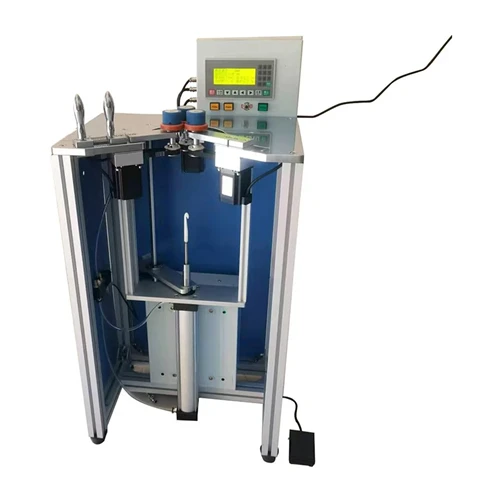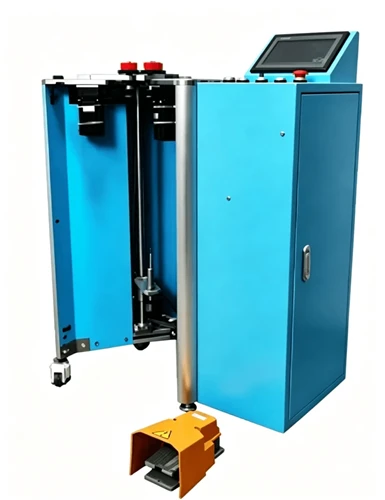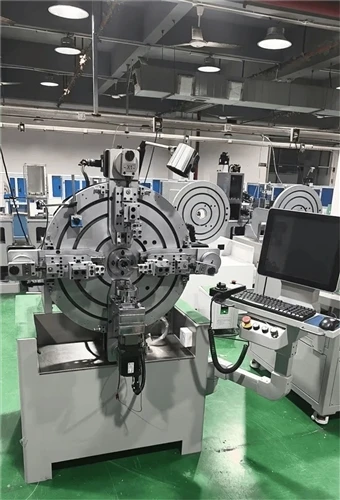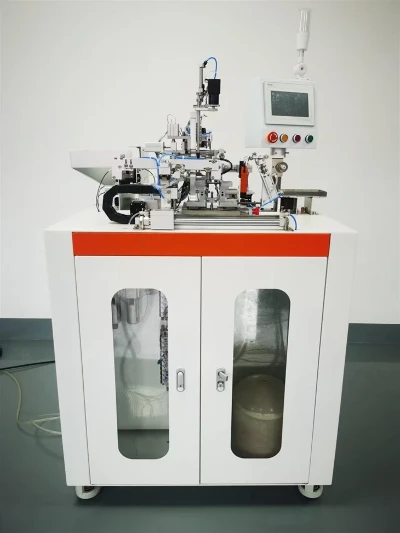


A coil winding machine helps manufacturers increase production efficiency, wind coils with tighter accuracy, cut copper wire waste, and reduce their dependence on skilled manual labor.
Compared with hand winding, a machine repeats the same turns count, layer pattern, and wire tension on every coil, so there are fewer rejects and more predictable electrical performance.
These benefits apply to transformers, inductors, motor stators, and ceiling fan motors, and they grow as order volumes rise. The sections below explain each advantage, show the formulas and numbers behind it, and describe how to choose the right equipment.

I. What Is a Winding Machine and How Does It Work?
A winding machine places insulated wire onto a bobbin, core, or former in a controlled pattern. A transformer winding machine is simply a coil winding machine set up for transformer bobbins, toroidal cores, or layer windings. Today's coil winding equipment ranges from simple bench winders to fully CNC systems.
a. Core components
A typical machine has a spindle that rotates the bobbin or core, a wire guide (traverse) that lays each turn in position, a tension controller that keeps the pull on the wire constant, and a turns counter or controller that stops the machine at the programmed count.
b. Basic working principle
The spindle turns at a set speed while the wire guide moves in step with it. The wire pitch equals the wire diameter plus insulation, so each turn sits next to the previous one. The controller repeats the same program for every coil, which is where the consistency comes from.
II. What Are the Main Advantages of a Coil Winding Machine?
| Advantage | What it means | Practical impact |
|---|---|---|
| Higher speed | Continuous, programmed winding | More coils per shift |
| Accuracy | Exact turns count, even layers | Stable voltage and inductance |
| Less waste | Controlled tension, fewer breaks | Lower copper and enamel wire loss |
| Lower labor dependence | Operators load, start, and unload | Less training time, fewer errors |
| Flexibility | Stored winding programs | Fast changeover between coil types |
a. Accuracy and repeatability
A machine counts every turn and places every layer the same way. The result is uniform coils from the first piece to the ten-thousandth.
b. Lower wire waste and rework
Steady tension prevents stretched or broken wire and damaged enamel. That means fewer scrapped coils and less rework at final test.
c. Less dependence on skilled labor
Hand winding needs experienced operators. With a machine, the skill sits in the program, so a new operator can produce good coils after short training.
d. Programmable flexibility
Modern controllers store dozens of winding recipes. Switching from one coil specification to another takes minutes rather than hours.

III. How Does an Automatic Coil Winding Machine Increase Production Efficiency?
An automatic coil winding machine shortens both the winding time and the handling time per coil. The basic relationships are:
Winding time: t_w = N ÷ (n ÷ 60)
Cycle time: t_c = t_w + t_l
Output per hour: Q = 3600 ÷ t_c
Here N is the number of turns, n is spindle speed in RPM, and t_l is the time for loading, unloading, and taping.
Worked example: A coil with 432 turns wound at 600 RPM needs t_w = 432 ÷ 10 = 43.2 seconds. Adding 30 seconds for loading and taping gives t_c = 73.2 seconds, so Q = 3600 ÷ 73.2 ≈ 49 coils per hour. A hand-crank operator averaging 12 coils per hour is at 300 seconds per coil, so the productivity gain is (49 − 12) ÷ 12 ≈ 308%.
Case example (illustrative figures): A small transformer workshop was hand-winding control transformers and struggled with turn-count mistakes on rush orders. After moving to an automatic coil winding machine with programmable turns and automatic stop, the results looked like this:
| Metric | Hand winding | Automatic machine |
|---|---|---|
| Coils per operator per hour | 12 | 49 |
| Scrap and rework rate | ~5% | ~1% |
| Operator skill required | High | Moderate |
| Batch consistency | Varies by operator | Uniform |
Want to increase production efficiency in your own workshop? Contact KIOXIA for a free winding solution recommendation based on your coil specifications.
IV. Why Does Winding Accuracy Matter in Transformer Coil Winding?
In transformer coil winding, the number of turns sets the voltage. The standard design equation is:
N = E × 10⁶ ÷ (4.44 × f × Ac × B)
where N is turns, E is voltage (V), f is frequency (Hz), Ac is core cross-section (mm²), and B is peak flux density (T).
Worked example: For a 230 V winding at 50 Hz with Ac = 2,000 mm² and B = 1.2 T:
N = 230 × 10⁶ ÷ (4.44 × 50 × 2,000 × 1.2) ≈ 432 turns.
a. Turns count and voltage ratio
Voltage ratio follows turns ratio. If a hand-wound coil is off by 4 turns out of 432, the output voltage shifts by about 0.9%. On a machine with a turns counter, that error disappears.
b. Inductance sensitivity in inductor coil winding
Inductance grows with the square of the turns (L ∝ N²), so a 1% turns error causes roughly a 2% inductance error. This is why inductor coil winding for filters and chokes benefits so much from machine control. For transformer design and safety requirements, refer to the IEC 60076 series for power transformers.
Case example (illustrative figures): A manufacturer of toroidal transformers for lighting equipment saw uneven layers and output-voltage drift between batches. After moving toroidal transformer winding onto a toroidal winding machine with programmable turns and tension control, batch-to-batch voltage variation tightened noticeably, and final-test rejects fell from about 6% to under 1%.
Struggling with consistency on toroidal or transformer coils? Send KIOXIA your coil drawing and we will suggest a suitable machine and winding program.
V. Which Coil Types Benefit Most From Winding Machines?
| Coil type | Suitable machine | Key advantage |
|---|---|---|
| Toroidal transformer | Toroidal winding machine | Even layers on a closed core |
| Inductor and choke | Coil winding machine with layer control | Precise inductance |
| Air coil | Air coil winding machine | Self-supporting, uniform shape |
| Motor stator | Electric motor winding machine | Consistent slot fill |
| Ceiling fan motor | Ceiling fan winding machine | High volume, low cost per unit |
a. Toroidal transformer winding
Winding wire through the center of a closed core by hand is slow and tiring. A toroidal winding machine automates this and keeps turns evenly spread around the ring.
b. Inductor and air coil winding
Air coil winding machines produce self-supporting coils with uniform diameter and pitch, which matters for high-frequency and RF applications.
c. Motor stator winding
For motor stator winding, an electric motor winding machine places wire precisely into stator slots, improving slot fill and balance between phases.
d. Ceiling fan motor production
A ceiling fan winding machine is built for high-volume runs of the same stator, so cycle time and consistency are the priorities.
VI. How Do CNC Coil Winding Machines Compare with Manual and Semi-Automatic Winding?
| Factor | Manual | Semi-automatic | CNC coil winding machine |
|---|---|---|---|
| Speed | Low | Medium | High |
| Accuracy | Operator-dependent | Good | Very high |
| Changeover | Slow | Moderate | Fast (stored programs) |
| Operator skill | High | Medium | Low to medium |
| Best for | Prototypes, repairs | Small batches | Volume and precision work |
a. When manual winding still makes sense
Manual or simple winders are fine for one-off prototypes, repairs, and very low volumes.
b. When a CNC coil winding machine pays off
Once you run repeat orders, multi-layer windings, or tight tolerances, a CNC coil winding machine pays back quickly through higher output, lower scrap, and quicker changeovers.
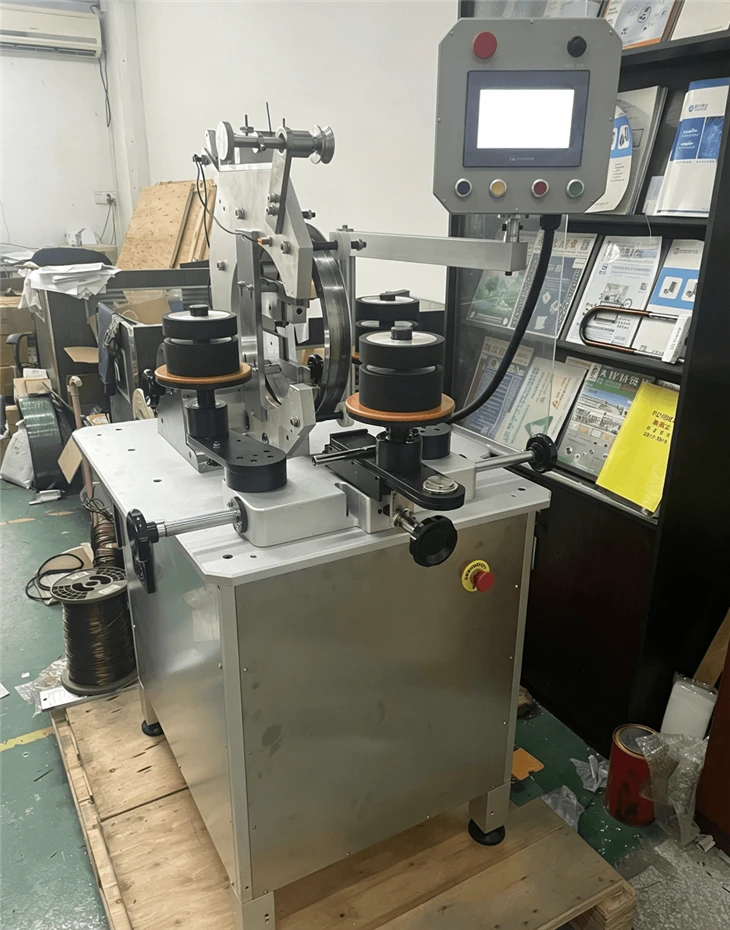
VII. How Much Can a Winding Machine Save in Cost and Material?
Wire cost is one of the biggest material items in coil production. Copper mass is:
m = ρ × A × L
where ρ is 8.96 g/cm³ for copper, A is wire cross-section, and L is total wire length.
Worked example: A 1.0 mm wire has A = 0.785 mm². With 432 turns and a mean turn length of 0.25 m, L = 108 m, so m ≈ 0.76 kg per coil. If a machine cuts scrap from 5% to 1%, the saving per coil is 0.76 × 0.04 ≈ 30 g. At 10,000 coils per month, that is about 304 kg of copper saved.
Payback can be estimated with a simple formula:
Payback period (months) = Investment ÷ monthly net savings
For illustration, an investment of USD 20,000 with monthly savings of USD 2,500 from labor, scrap, and higher output pays back in 8 months. Wire quality also affects results, so choose magnet wire that meets recognized specifications such as NEMA MW 1000 or IEC 60317.
VIII. How Do You Choose the Right Coil Winding Equipment?
| Factor | What to check |
|---|---|
| Coil type | Toroidal, bobbin, air coil, or stator |
| Wire range | Minimum and maximum wire diameter supported |
| Tension control | Stable, adjustable, closed-loop if possible |
| Controller | Program storage, ease of setup, turns accuracy |
| Support | Training, spare parts, English-language service |
a. Match the machine to your product
Start from your coil type and volume. A machine that is too simple limits quality, while one that is too complex wastes budget.
b. Check tension and wire range
Confirm the machine handles your finest and thickest wire without breakage or slack.
c. Evaluate the coil winding machine manufacturer
A good coil winding machine manufacturer offers customization, clear documentation, quick spare-part supply, and support that speaks your language. Ask for references and test-winding samples before ordering.

IX. Which KIOXIA Winding Machines Are Right for Your Production Line?
KIOXIA Light Ring Equipment Group Co., Ltd. is a Tianjin-based coil winding machine manufacturer that supplies customers in markets including India, Europe, Russia, and Southeast Asia.
Our range covers toroidal winding machines, CNC and programmable coil winding machines, air coil winding machines, and dedicated equipment for motor stator and ceiling fan winding, with custom options for special coil designs.
If you want to increase production efficiency, improve winding consistency, or scale up transformer and inductor production, contact KIOXIA with your coil specifications and we will recommend a suitable solution.
You may be interested in:
Why Are High-Power Transformers More Likely To Use Flat Copper Wire Instead Of Round Copper Wire?
Toroidal Transformer Failure: Causes & Prevention
Key Machinery Required To Build A Semi-Automated Transformer Factory From Scratch