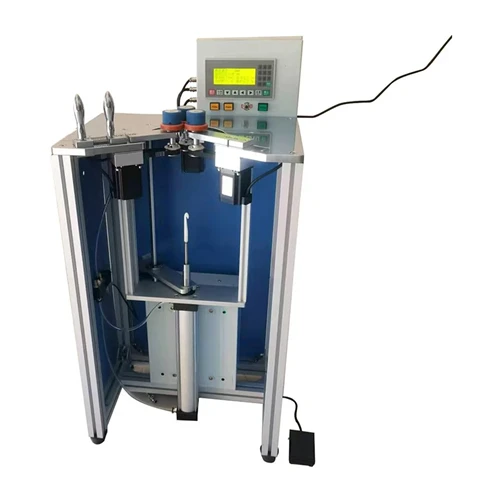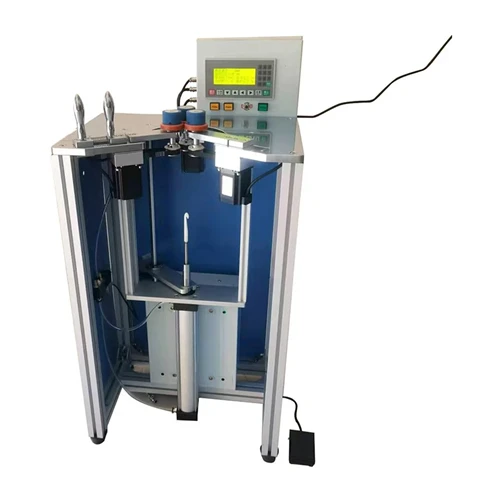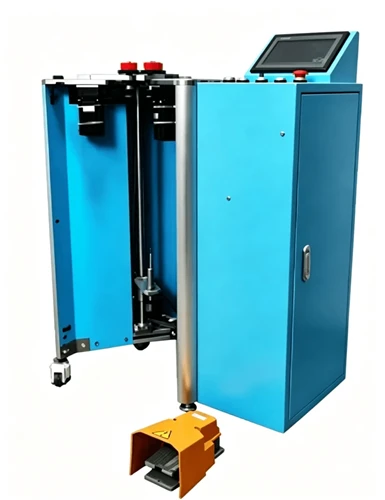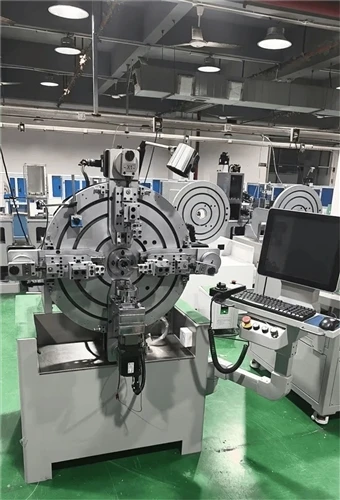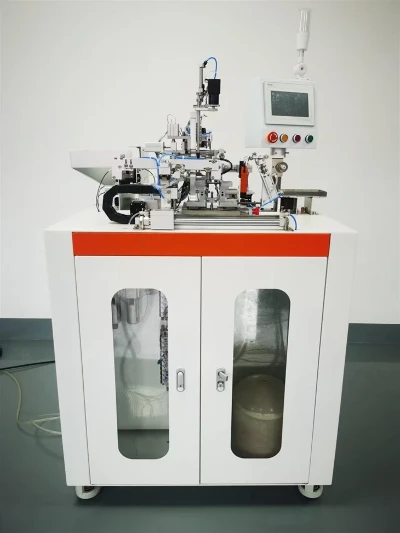


Choosing between a CNC coil winding machine and a programmable coil winding machine is one of the most consequential decisions a transformer, inductor, or motor manufacturer will make. The wrong choice leads to wasted capital, bottlenecked production lines, and inconsistent coil quality.
This guide breaks down the technical and commercial differences between these machine categories, shows you how to size equipment against your own winding parameters, and helps you evaluate suppliers - including sourcing directly from a China winding machine manufacturer.

I. What Is a CNC Coil Winding Machine?
A CNC coil winding machine uses computer numerical control to drive the spindle, wire guide, and tensioning system through pre-programmed motion paths.
Unlike mechanically cam-driven winders, a CNC platform reads a digital winding recipe - turns count, pitch, layer transitions, tension curve - and executes it with servo-level repeatability.
a. Core components of a CNC winder
| Component | Function | Impact on Coil Quality |
|---|---|---|
| Servo spindle motor | Rotates the bobbin/core at programmed speed | Determines turn-to-turn consistency |
| Multi-axis wire guide | Positions wire across the winding width | Controls layering and pitch accuracy |
| Closed-loop tension control | Maintains constant wire tension | Prevents wire breakage and loose windings |
| Human-machine interface (HMI) | Stores and edits winding programs | Enables fast changeover between products |
b. Where CNC winding delivers the most value
CNC machines are the standard choice when coil geometry is complex - multi-layer transformer bobbins, tapped windings, or coils requiring variable pitch within a single layer. Because every axis is servo-controlled, a CNC coil winding machine can hold tolerances that cam-driven or manual equipment cannot reliably reproduce across a production run.
II. What Is a Programmable Coil Winding Machine, and How Does It Differ from CNC?
A programmable coil winding machine is often used as an umbrella term, but in practice it refers to equipment with PLC-based, recipe-driven control - capable of storing multiple winding programs and switching between them without mechanical retooling. The distinction from full CNC lies in the level of axis integration and motion precision.
a. PLC-programmable vs. CNC-controlled: the practical difference
| Feature | Programmable (PLC-based) | CNC-Controlled |
|---|---|---|
| Motion control | Sequenced logic, servo-assisted | True multi-axis coordinated motion |
| Typical precision | ±0.5% turn accuracy | ±0.1% turn accuracy or tighter |
| Program storage | Dozens of recipes | Hundreds of recipes, parametric editing |
| Best suited for | Standard bobbin/bar coils, repeat production | Toroidal, irregular, or high-layer-count coils |
| Relative investment | Lower | Higher |
| Changeover time | Minutes | Minutes, with finer parameter control |
b. When "programmable" is the smarter buy
For manufacturers running high volumes of a relatively small number of standardized coil designs - solenoids, simple bobbin coils, common inductor formats - a programmable coil winding machine often delivers the accuracy needed at a lower capital cost than a full CNC platform. The extra axis precision of CNC becomes valuable mainly when coil geometry varies or when tolerance requirements tighten.
III. How Do Fully Automatic Coil Winding Machines Compare to CNC and Programmable Types?
"Fully automatic" describes the degree of human intervention in the process, not the control architecture itself. A fully automatic coil winding machine can be built on either a CNC or a PLC-programmable control core - the defining feature is that wire feeding, cutting, terminating, and often core loading/unloading happen without an operator touching each cycle.
a. Automation levels at a glance
| Automation Level | Operator Role | Typical Output Rate | Common Application |
|---|---|---|---|
| Manual | Guides wire and controls tension by hand | Low | Prototyping, repair |
| Semi-automatic | Loads core, machine executes winding | Medium | Small-batch production |
| Fully automatic | Loads magazine periodically; machine handles winding, wire termination, unloading | High | Mass production of transformers, motors, inductors |
b. Why fully automatic matters for scaling production
A fully automatic coil winding machine removes operator-dependent variation almost entirely, which is critical once production volumes exceed what semi-automatic lines can sustain without quality drift. Combined with CNC or programmable control, full automation is what allows manufacturers to quote high-volume orders with confidence in consistent lead times.

IV. Which Winding Machine Works Best for Inductor and Current Transformer Manufacturing?
Inductors and current transformers (CTs) have distinct winding requirements that push buyers toward specific machine configurations rather than a generic "best" machine.
a. Inductor winding machine requirements
An inductor winding machine typically needs to handle fine wire gauges, tight turn counts, and - for many inductor formats - toroidal or drum cores. Precision tension control matters more than raw speed here, since inductance value is directly sensitive to winding consistency.
b. Current transformer manufacturing requirements
Current transformer manufacturing usually involves toroidal cores with secondary windings requiring very even turn distribution around the core circumference, since uneven winding distorts the CT's ratio accuracy and phase angle. This is one of the clearest cases where a toroidal-capable CNC or programmable winder outperforms general-purpose bobbin winders.
| Requirement | Inductor Winding | Current Transformer Winding |
|---|---|---|
| Core type | Toroidal, drum, rod | Toroidal (near-universal) |
| Wire gauge range | Fine to medium | Fine to medium |
| Critical parameter | Inductance repeatability | Turns ratio & phase accuracy |
| Recommended control | Programmable or CNC | CNC preferred for high-accuracy CTs |
V. Why Are Toroidal Transformer and Motor Winding Machines Different Categories?
Buyers researching "winding machine" often lump toroidal transformer equipment and motor winding equipment together, but they solve different mechanical problems.
a. Toroidal transformer winding machine mechanics
A toroidal transformer winding machine threads wire through the center of a ring-shaped core using a rotating shuttle or slider mechanism, since the core has no open end to wind onto directly. This is mechanically unlike any linear-bobbin process and requires dedicated toroidal winding heads.
b. Motor winding machine mechanics
A motor winding machine, by contrast, winds wire into open stator or armature slots, often across multiple poles in a single automated cycle. Motor winding equipment prioritizes coordinated multi-spindle operation and needle or flyer-based wire placement rather than the shuttle-threading approach used in toroidal winding.
Because the two processes are mechanically unrelated, a manufacturer producing both toroidal transformers and motor components typically needs two separate machine platforms rather than one machine configured for both.

VI. How Do You Calculate Winding Turns Before Choosing a Machine?
Before specifying a machine's spindle speed, tension range, or wire-guide travel, you need the turns count your design requires. For power and audio-frequency transformers, turns per winding are derived from the standard EMF equation:
E = 4.44 · f · N · Ac · B · 10⁻⁶
Rearranged to solve for the number of turns (N):
N = (E × 10⁶) / (4.44 · f · Ac · B)
Where:
| Symbol | Parameter | Unit |
|---|---|---|
| E | Winding voltage | V |
| f | Operating frequency | Hz |
| N | Number of turns | turns |
| Ac | Core cross-sectional area | mm² |
| B | Flux density | T |
a. Worked example
For a 220 V, 50 Hz winding on a core with Ac = 400 mm² and a design flux density of 1.2 T:
N = (220 × 10⁶) / (4.44 × 50 × 400 × 1.2) ≈ 2,064 turns
This turns count, together with wire gauge and layer count, is what determines whether your winding profile needs the finer multi-axis control of a CNC coil winding machine or can be handled efficiently on a programmable platform.
b. Why this matters for machine selection
Higher turns counts on small-diameter toroidal cores compress wire spacing tolerances, which is exactly the condition where CNC-level axis coordination earns its price premium over standard programmable control.
VII. Why Choose a China Winding Machine Supplier When Looking for Winding Machines for Sale?
Global demand for winding machines for sale has concentrated heavily around China winding machine manufacturers over the past decade, driven by deep supply chains for servo motors, PLCs, and precision mechanical components.
a. Sourcing advantages
| Factor | Typical Outcome |
|---|---|
| Component supply chain depth | Faster build times, competitive pricing on servo/PLC components |
| Manufacturing clusters (e.g., Tianjin, Guangdong) | Access to specialized toroidal and CT winding expertise |
| Export experience | Established Incoterms practices (FOB, DAP, DDP) for international buyers |
| Customization capability | Willingness to adapt tooling for non-standard core sizes |
b. What to verify before ordering
When evaluating winding machines for sale from any coil winding equipment supplier, confirm actual factory capability (not just trading company status), request video proof of the machine running your wire gauge and core size, and clarify after-sales support terms - spare parts availability and technical support response time matter more over the equipment's lifetime than the sticker price.

VIII. How Do You Choose the Right Coil Winding Equipment for Your Production Line?
Bringing the categories above together, here is a practical decision framework for coil winding equipment selection.
| Your Priority | Recommended Machine Type |
|---|---|
| Complex, multi-layer, or tapped coils | CNC coil winding machine |
| High-volume, standardized coil designs | Programmable coil winding machine |
| Minimizing labor cost per unit at scale | Fully automatic coil winding machine |
| Toroidal cores (transformers, CTs, inductors) | CNC or programmable toroidal-specific winder |
| Motor stators/armatures | Multi-spindle motor winding machine |
a. Match the machine to the coil, not the other way around
The most common buying mistake is selecting equipment based on price tier alone rather than coil geometry. A CNC platform sized for toroidal transformer winding will not efficiently handle motor stator winding, and vice versa.
b. Plan for future product mix, not just current orders
Because changeover between winding programs is fast on both CNC and programmable platforms, it's worth specifying slightly broader axis range or tension capacity than your current product line strictly requires, to avoid a second capital purchase when your product mix expands.
IX. Final Recommendation
For manufacturers weighing CNC precision against programmable-platform cost efficiency, KIOXIA Light Ring Equipment Group offers both paths on proven toroidal winding platforms.
The KX-7005 Full Automatic Slider Type Toroidal Winding Machine is built for high-volume toroidal transformer and inductor production requiring fully automatic operation with CNC-level turn accuracy, while models in the KX-9800 series suit programmable, recipe-driven production runs where standardized coil designs dominate the order book.
Both platforms are engineered and manufactured in-house in Tianjin, China, giving buyers direct factory access rather than trading-company intermediation.
For a specification match against your exact wire gauge, core dimensions, and target turns count, view the full product range at transformercoilwindingmachine.com.
You may be interested in:
Key Components Of A Coil Winding Machine
How To Acceptance Test A Winding Machine
What Is The Main Advantage Of Single Layer Winding?
What Are Current Transformer Testers And How Do They Work in Power Systems?